Hackathon season is back, which means cold conference rooms, way too much free pizza, and that slightly unhinged 2am energy when the code finally runs.
We’re AngelHack, the team behind 450+ hackathons across 100+ cities, which means we’ve watched thousands of teams either thrive, or crash. This hackathon survival guide is what we tell anyone who asks us how to get through the weekend in one piece.
It’s for anyone curious about hackathons: people who don’t code yet but want to build cool things, folks who are tired of theory and want something hands-on, and anyone who likes the idea of making something over a weekend with new people.
What you actually get out of a hackathon
A hackathon is usually a weekend-long event where you team up, build a tech project, and demo it at the end. Part competition, part collaboration, part hangout.
The project is only half the point. The teams we see get the most out of a weekend also walk away with:
- New skills you picked up fast, because you used them on something real
- A growing network of builders, mentors, and recruiters
- Free food, swag, and sometimes travel reimbursement
- Friends from other teams, cities, and countries
- Prizes, from gadgets to gift cards to job interviews
And you don’t need to be an expert to get any of it. You just need to show up and build something.
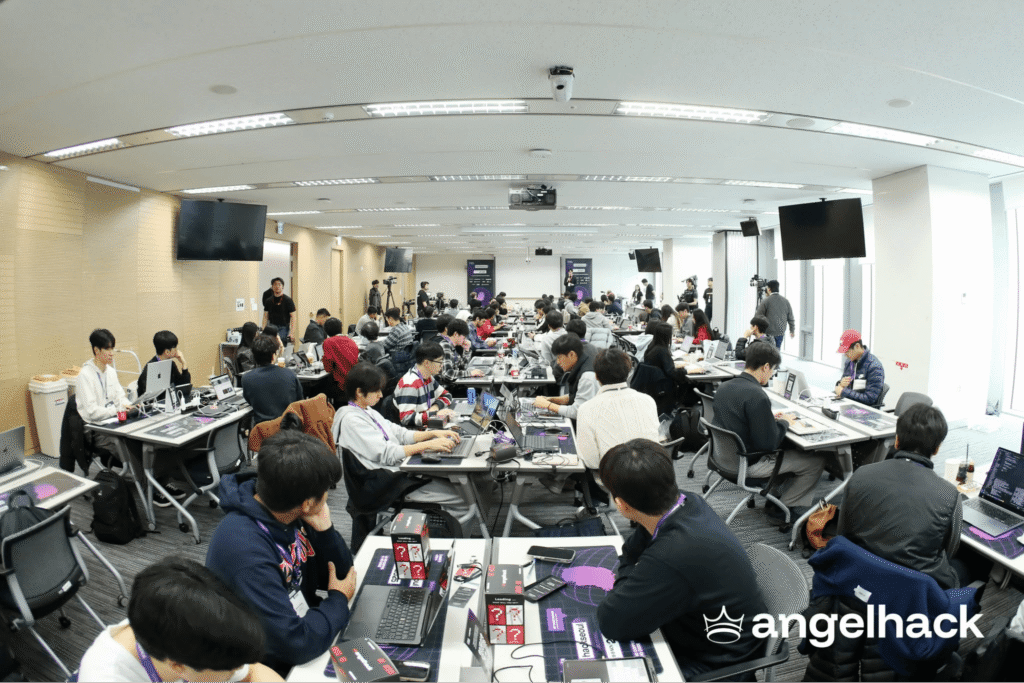
Photos throughout are from hackseoul, which we hosted in 2025!
Before you go: the prep that pays off
The teams that have a calm, fun weekend are almost always the ones that did a little homework first. Here’s what to sort out before you show up:
📋 Read the brief
Go through the tracks, rules, judging criteria, and submission deadlines so you’re building for what actually gets scored.
🎯 Scan the sponsor tech
If sponsors are involved, check their APIs ahead of time and note what they want to see built.
🏆 Look at past winners
If the hackathon is a recurring event, past projects tell you a lot about the right scope and what judges reward.
⚙️ Set up early
Create your GitHub repo, grab the accounts and API keys you’ll need, and get your editor working, so you’re not configuring tools at hour one.
✏️ Sketch a couple of ideas
Walk in with two or three rough concepts so you don’t start the weekend staring at a blank screen.
👥 Sort your team early
Teams usually come together before the event, so meet up with yours ahead of time to assign roles and run through a few ideas.
🎒 Pack the essentials
Laptop and charger, headphones, a water bottle, basic toiletries, and something to sleep on if it runs overnight. Most other things are provided by the hackathon organizer.
The actual building: make something that runs
Start by scoping hard. Pick the one feature that proves your idea and build only that. We call it a working prototype for a reason: it runs, it makes the point, and it fits the time-boxed window you actually have.
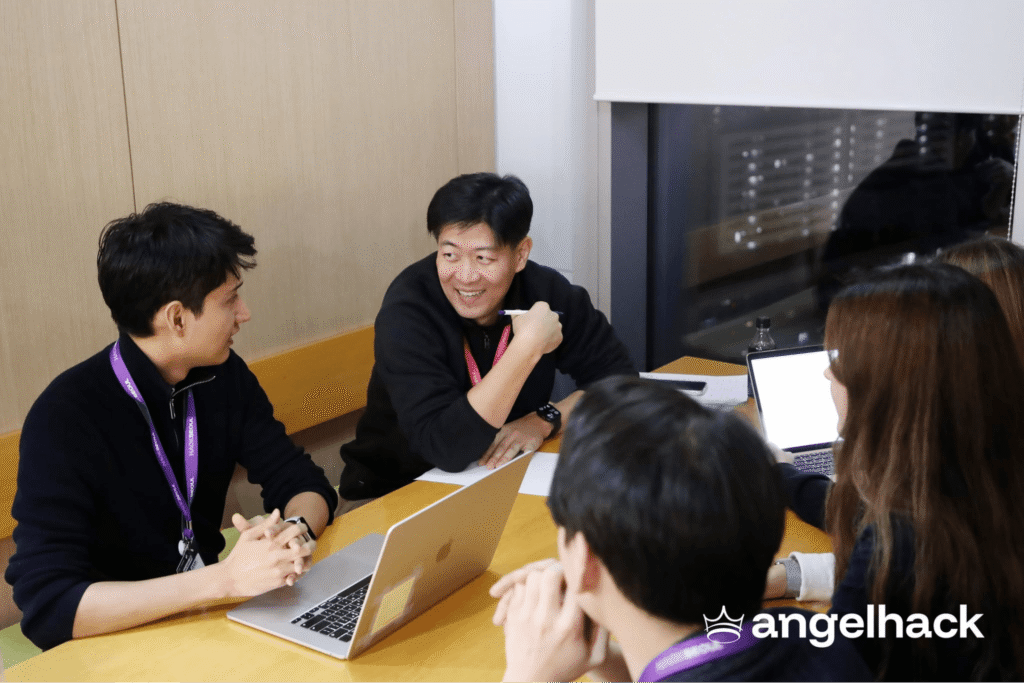
If you’re stuck on what to make, our list of hackathon ideas you can build in a weekend → is a good starting point. Once you’ve got your idea, run it past a mentor before you write a line of code. They walk the room for exactly this, and ten minutes early can save you hours building the wrong thing.
Software has three layers, and it helps to know where your time goes. There’s the frontend (what people see), the backend (data and logic), and deployment (getting it live). Most teams pour hours into the frontend and run out of time getting the thing online. Don’t do that. Get your project onto a public URL, not just localhost, because judges need to click through it themselves.
Pick one stack and commit to it instead of switching tools halfway through. Use GitHub so a cross-functional team isn’t overwriting each other’s work, and keep a simple task list so everyone knows what’s done and what’s left. AI and no-code tools make a lot of this faster than it used to be, so here’s a rough menu of what people reach for:
- AI coding assistants for writing and debugging, like Cursor, GitHub Copilot, or Claude Code
- Prompt-to-UI tools for a quick frontend, like Lovable, v0, or Bolt
- No-code backends for data and logins, like Supabase or Firebase
- Design and slides for mockups and your pitch, like Figma and Canva
A few habits keep the build on track:
- Assign roles before anyone opens an editor.
- Save a working version often, so a late bug doesn’t sink everything.
- Build and test the demo early, instead of scrambling at the end.
♦️ For the full set of tactics that separate the teams that place, see our hackathon tips piece.

Look after yourself (and enjoy the perks)
You build better when you’re not running on fumes.
Eat real meals and drink water. Most hackathons come stacked with food, usually free, everything from pizza and pad thai to warm cookies and a spicy noodle challenge or two. Treat food and energy as part of your performance, not a distraction from it.
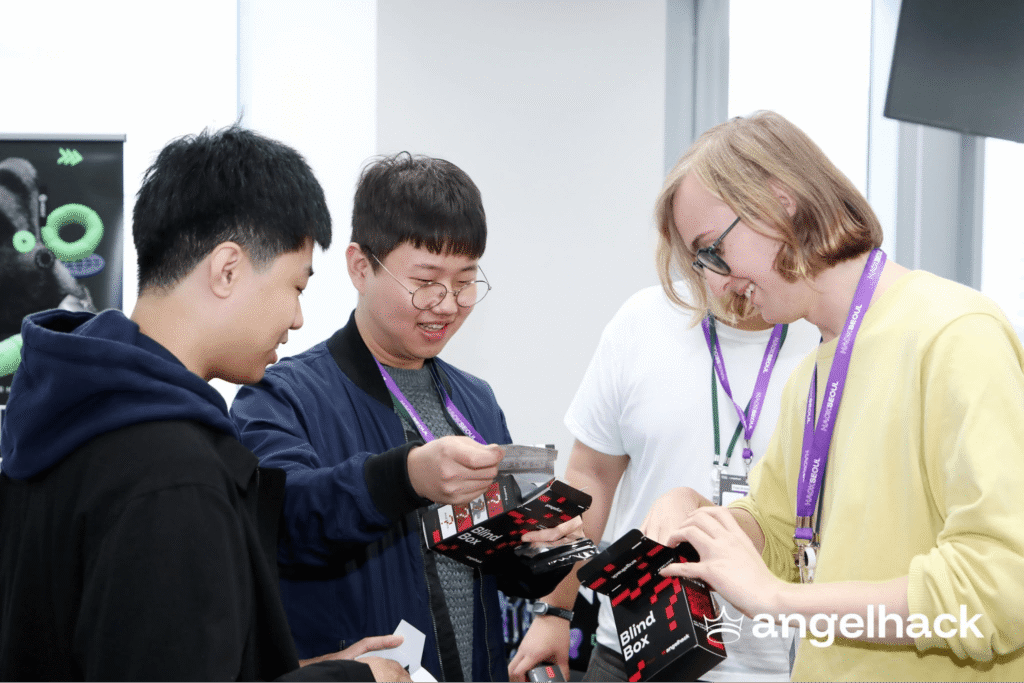
Grab the swag while you’re at it. Organizers usually design event merch, and companies hand out their own at the booths, and by day two we’ve seen booths clearing out whole boxes of T-shirts. Don’t skip the side events either. We’ve run events with rock painting, lock-picking workshops, and karaoke in a lecture hall. Stepping away from your screen for half an hour does more for a stuck brain than another hour of staring at the same bug.
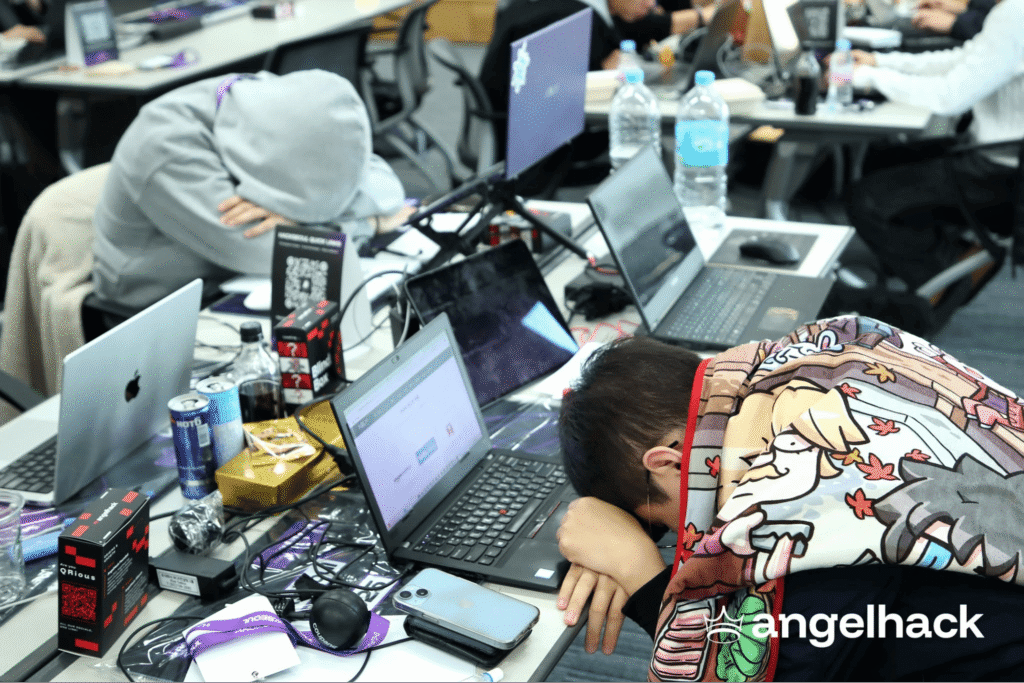
Then the basics: use the showers if the venue has them, and pack what you need to stay fresh either way. Please get some sleep. We’ve watched plenty of teams run on a single hour of sleep, demo like zombies, then disappear for sixteen hours afterward. A few hours of rest genuinely changes how well you think and present. All-nighters feel productive and almost never are.
It’s about more than the prize
We hand out the trophies at the end, so we can tell you with some authority that the prize isn’t the part that lasts. The teams that don’t win take it hard, especially when they had a specific prize in mind. But what every team keeps is the same, win or lose.
It’s the skills you sharpened and the people you built alongside, so use the weekend to meet them:
- Talk to mentors early. They want to help, and the ones judging remember the teams they spoke with. Ask what to cut, not just what to add.
- Visit the booths and recruiters. Sponsors staff them with engineers who can unblock you and recruiters who actually hire. Watch for hackathon-exclusive job links.
- Meet builders on other teams. Those friendships outlast the weekend, and you’ll show up to the next event already knowing a few faces.
- Follow up post-event on LinkedIn. Send the request within a day or two, and mention the project so it lands as a real connection.
Your project becomes portfolio material and proof that you can ship something under pressure, which counts for more in an interview than most people expect. The people you meet become collaborators, references, and sometimes the reason you hear about a job at all. And every event compounds. You get faster, braver, and better connected each time, until the weekend that once felt intimidating turns into the one you look forward to most.
So, where do you start?
Hopefully you’re a little more excited and a lot less nervous than when you started reading.
If you want to find your next event, browse the AngelHack hackathon calendar and pick one that fits your schedule. If you’d rather meet some builders first and ease in, join the AngelHack developer community and say hi.
Either way: build something, eat the free food, and make a few friends along the way. Maybe we’ll see you at one of ours!