Corporate innovation is not just a buzzword. It is the difference between companies that lead their industries and those that get left behind. For most organizations, the gap between wanting to innovate and actually doing it remains stubbornly wide. Hackathons are one of the most effective ways to close that gap, bringing together developers, designers, and business thinkers to rapidly build and pitch solutions to real challenges in days rather than months.
In this guide, we walk you through the current innovation landscape, explain why hackathons belong at the center of your strategy, share what makes them work in practice, and show how AngelHack has helped organizations around the world turn bold ideas into measurable results.
Why Corporate Innovation Is Harder Than It Looks
According to BCG’s 2025 Most Innovative Companies report, top innovators outperformed the broader market by 2.4 percentage points annually on average, with especially strong gains during periods of disruption like the Great Recession and the COVID-19 pandemic. The companies that consistently invest in innovation do not simply survive turbulence; they use it to pull ahead of competitors who are playing it safe.
But most organizations are still struggling to make it happen. Technology moves faster than traditional R&D can keep up with, top talent gravitates toward employers that offer meaningful work, and digital capability is no longer a differentiator – it is the baseline. The gap between ambition and execution keeps growing, and that is exactly the problem hackathons are built to solve.
Hackathons as a Key Corporate Innovation Strategy
Fortune 500 companies are already using hackathons to drive ROI across talent retention, product roadmap acceleration, and rapid prototyping. But what actually happens at a hackathon, and why does the format work so well for corporate innovation?
At its core, a hackathon is a time-boxed event, typically running between 24 and 72 hours, where cross-functional teams come together to build and pitch a working solution to a defined challenge. Participants receive a problem statement, access to tools and mentors, and a firm deadline. The pressure is intentional: it forces focus, fast decision-making, and creative problem-solving that slower project cycles rarely produce. By the end, teams present real working prototypes rather than slide decks.
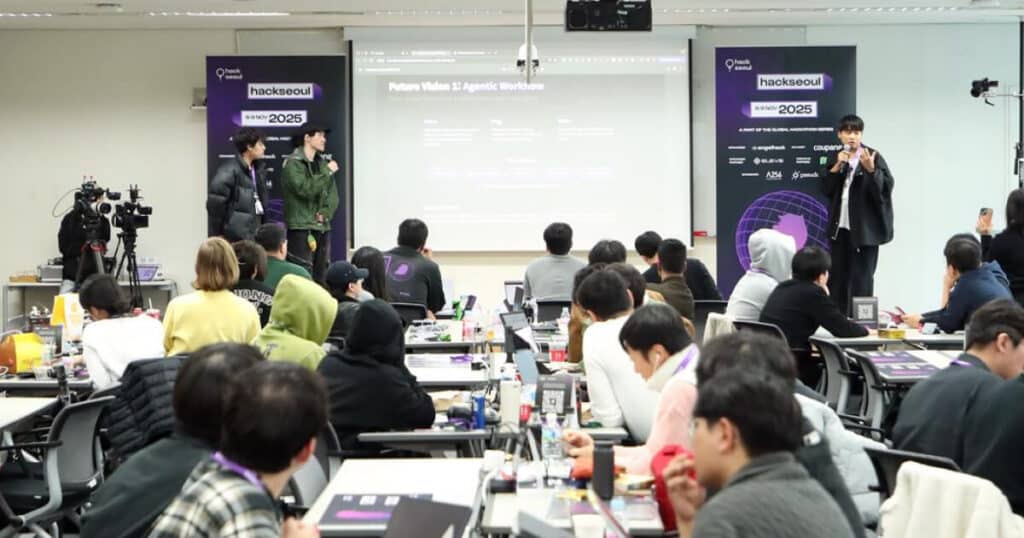
This format contributes to corporate innovation in ways that traditional processes struggle to replicate:
- Speed: teams move from idea to working prototype in days, compressing timelines that would otherwise stretch across months of planning
- Low risk: bold ideas get tested and validated before significant budget or engineering time is committed
- Talent visibility: standout contributors inside and outside the organization surface naturally in ways that standard hiring processes often miss
- Cross-functional collaboration: engineering, product, design, and business teams work side by side toward a single shared goal, breaking down silos organically
- Culture shift: running hackathons on a recurring basis gradually embeds experimentation as a company-wide norm rather than a one-off event
- Ecosystem momentum: open hackathons attract external developers and build genuine community goodwill around your platform or mission
Hackathons take different shapes depending on what you need, and choosing the right format is one of the most important decisions you will make before the event begins.
- Internal hackathons work best for employee engagement and surfacing ideas that already exist within your organization but have never had a stage.
- External hackathons tap into the global developer community, bringing in fresh perspectives and skills that may not exist in-house.
- Themed hackathons, scoped tightly around a domain like AI, sustainability, or cybersecurity, attract participants with real domain expertise and consistently produce higher-quality, more targeted outputs.
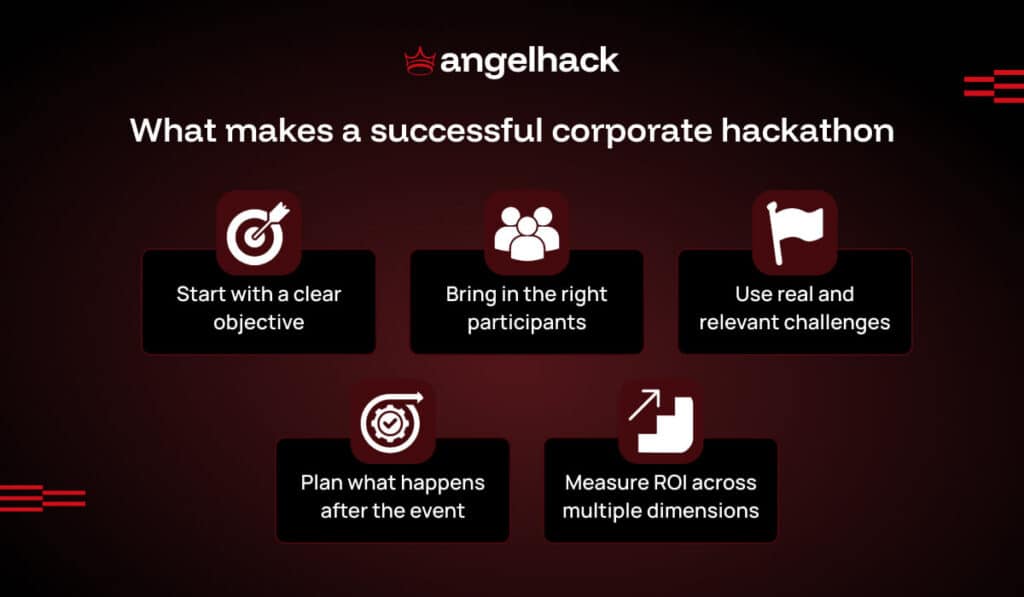
What Makes a Corporate Hackathon Actually Work
Not all hackathons deliver meaningful results, and the difference between a high-impact event and a forgettable one almost always comes down to decisions made well before anyone shows up.
Start with a clear objective
Define what success looks like before designing anything. Are you generating product ideas, identifying talent, driving platform adoption, or shifting culture? Your goal shapes the challenge design, participant profile, and follow-up process, and a well-scoped challenge is the single most important thing you can get right.
Bring in the right participants
A hackathon with 100 to 200 highly engaged, well-matched participants will almost always outperform one with 2,000 casual sign-ups. Targeted outreach and participant vetting separate a high-signal event from a high-volume one, and mixing internal employees with external builders creates richer cross-pollination than either group generates alone.
Design challenges that connect to the real world
Real-world, domain-relevant problems consistently generate outputs that are actionable and implementable. Abstract prompts tend to produce solutions that look impressive in a demo but go nowhere afterward.
Plan for what comes next
Define what happens to winning ideas before the event starts. Whether it is a funding decision, an executive review, or a pathway into an accelerator, participants need to know their work has somewhere to go. Without that clarity, even the best outputs tend to disappear after demo day.
Track the right ROI dimensions
ROI from hackathons is multi-dimensional. Look at speed (time from idea to prototype), volume (viable concepts generated), talent (standout contributors identified), pipeline (ideas that move into funded development), and culture (measurable shifts in engagement and innovation participation).
Real Results: Corporate Innovation in Action
The best way to understand what hackathons can do is to see what they have already done for others. Here is how two global organizations worked with AngelHack to turn the format into real, lasting outcomes.
Lyf: 30 Solutions Built Around a Real Business Challenge
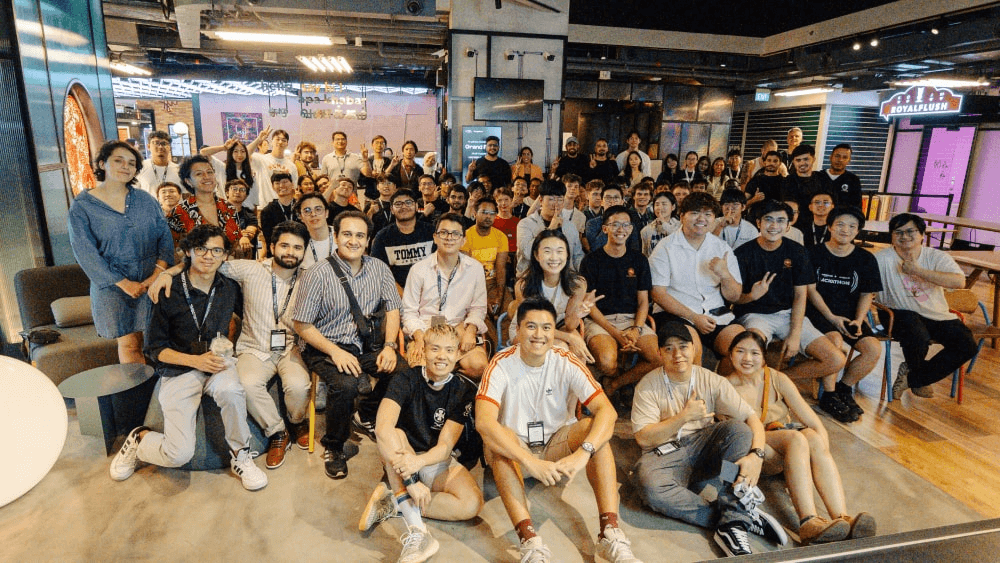
Lyf, a co-living brand across 20+ cities, used the hackglobal Grand Finals to tackle real challenges around resident experience, operations, and sustainability. Finalists from seven countries were given direct access to Lyf staff, conducting interviews to inform their solutions with real on-the-ground context. The event generated 30 innovative projects, and the grand-winning team built GreenGO!, a real-time carbon footprint tracking system now being explored as a live pilot within Lyf properties.
DBS Bank: 300+ Developers, 30+ Fintech Solutions in 24 Hours

DBS Bank wanted to improve digital banking for Singapore’s aging population while deepening its connection with the local tech community. Sponsoring hacksingapore gave the bank direct access to a large developer network without the overhead of running a standalone event. Over 300 developers gathered at DBS Asia X, the bank’s own innovation hub, and generated 30+ solutions in a single 24-hour sprint. Three finalist teams pitched directly to DBS leadership, opening the door to future collaborations.
Building a Sustainable Corporate Innovation Strategy
A single hackathon can generate real results, but a recurring program compounds them. The organizations that get the most value treat hackathons not as isolated events but as entry points into a broader, connected innovation ecosystem where outputs feed directly into the next stage of development. The strongest corporate innovation strategies connect hackathons to a wider toolkit:
- Open innovation: use hackathons to source ideas and solutions from outside your organization at scale, engaging communities you could not reach through internal R&D alone.
- Intrapreneurship: give employees with entrepreneurial instincts a stage to build something real, with clear pathways for the best ideas to move forward with resources and executive support.
- Accelerators and incubators: feed hackathon outputs into structured programs that provide the mentorship, funding, and time needed to turn a prototype into a product.
- Venture-building: use the most compelling hackathon ideas as raw material for entirely new business units, products, or spinoffs.
The key to making this sustainable is starting simple: define what success looks like, establish governance so that promising ideas have a clear path forward after the event ends, and run a focused pilot before scaling up. Each iteration teaches you something that makes the next program stronger.
Your Next Hackathon Starts Here
Corporate innovation does not have to be slow, expensive, or uncertain. Hackathons give you a faster, leaner, and more collaborative way to test ideas, surface talent, and build the culture that makes innovation sustainable at any scale and across any industry.
AngelHack has partnered with 140+ organizations worldwide, from government agencies to Fortune 500 companies, to design and deliver innovation programs that create real, measurable impact. We handle everything from challenge design and participant outreach to event execution and post-hackathon reporting, so your team can focus on what matters most: the ideas, people, and decisions that move your organization forward.
Talk to the AngelHack team and let’s figure out what the right hackathon looks like for your organization.
Your Next Breakthrough Starts With a Hackathon
With 140+ global programs delivered end-to-end, from challenge design to post-event reporting, AngelHack is the trusted partner to make your corporate hackathon a success
Frequently Asked Questions about Hackathons
How can a hackathon help my company innovate faster?
Hackathons compress the ideation-to-prototype cycle from months into days, letting teams test bold ideas without committing significant budget. The key is pairing the event with a clear follow-up process so ideas actually go somewhere after demo day.
What hackathon format works best for corporate innovation?
It depends on your goal. Internal hackathons surface ideas from within your organization. External hackathons bring in fresh perspectives from the wider developer community. Themed hackathons, scoped around AI, sustainability, or cybersecurity, attract specialized participants and produce more targeted outputs.
How do we make sure our hackathon produces ideas we can actually use to innovate?
It starts with challenge design. Well-scoped, real-world challenges lead to actionable outputs, while vague prompts produce solutions that go nowhere after demo day. Define a clear evaluation process before the event so your team knows how to assess and resource the best ideas coming out of it.
Can a hackathon help us innovate without the capacity to run one internally?
Yes. Many organizations run their first hackathon by working with an external partner who handles logistics, mentorship, judging, and reporting, leaving internal teams free to focus on participating and decision-making.
How do we turn a one-time hackathon into an ongoing innovation capability?
Treat it as an entry point, not a destination. The strongest programs feed hackathon outputs into broader innovation systems like internal accelerators and intrapreneurship pipelines, growing from a single pilot into a recurring program over time.