Most companies already have more good ideas than they know what to do with. A company hackathon works when it turns those ideas into something concrete – fast.
When hackathons are tied to real priorities, properly supported, and followed by clear next steps, they can produce working prototypes, uncover hidden talent, and shift how teams collaborate – in days, not months.
This guide breaks down how to run a company hackathon people actually want to join (and leadership actually takes seriously), based on what works in practice.
What Is a Company Hackathon (And Why Run One?)
A company hackathon is a short, focused event where people across your organization form teams to tackle real business problems. Teams go from idea to prototype, then pitch their concepts to judges or leaders at a final showcase.
At their best, hackathons do three things unusually well:
Turn ideas into action quickly (instead of letting them sit in decks)
Bring different parts of the business together in ways that rarely happen day-to-day
Surface new leaders, skills, and “hidden” talent in a visible, low-risk environment.
McKinsey has noted that disengagement and attrition among employees can cost a median S&P 500 company 228 millions/year over five years – so investing in engagement vehicles like company hackathons carries real financial upside.
Company Hackathon Best Practices: Anatomy of a High-Performing Event
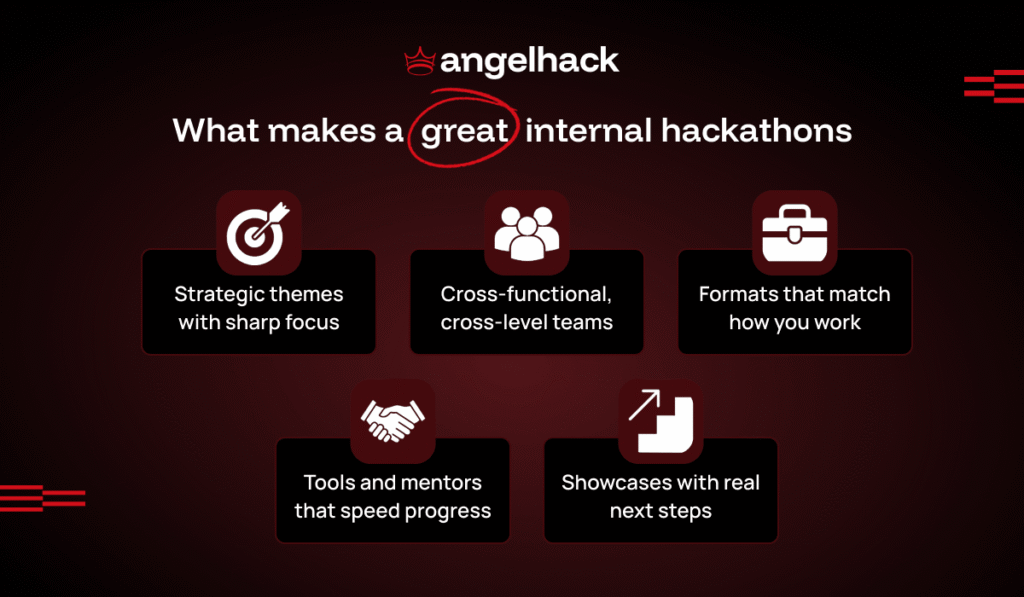
The best hackathons don’t feel chaotic. They feel focused, supported, and worth people’s time. Here’s what consistently separates strong programs from forgettable ones:
- Strategic themes with sharp focus: Tie challenges to priorities like customer experience, efficiency, AI, or sustainability. Keep briefs short and plain-language so teams spend time solving, not decoding.
- Cross-functional, cross-level teams: Mix tech, business, and operations roles so solutions are both feasible and grounded in daily reality. Frontline, support, and back-office voices make the output far stronger.
- Formats that match how you work: Choose a format that fits your culture – a one to two day sprint, a 48–72 hour hybrid event, or a multi-week part-time sprint. Ambitious but workable is the goal.
- Tools and mentors that speed progress: Give teams mentors, office hours, starter data sets, and the right tools from day one.Clear judging criteria around impact, feasibility, innovation, and alignment keep everyone focused.
- Showcases with real next steps: A demo day with leadership signals that the work matters. Pair it with a pre-agreed path to pilots or an accelerator so the event becomes the start of something bigger, not the end.
Success story: How UBS turned a global company hackathon into funded pilots
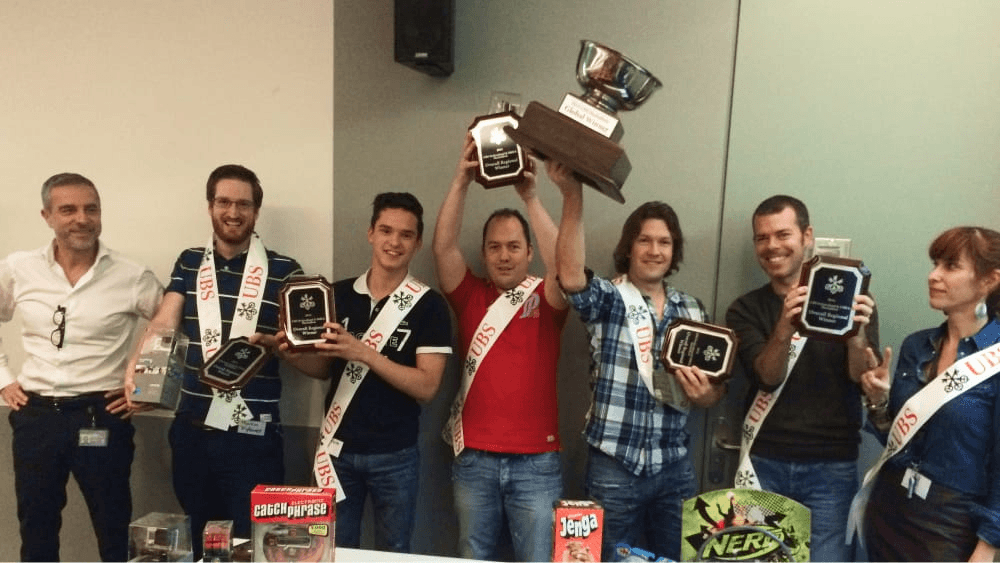
UBS ran a company hackathon with AngelHack that brought together over 500 employees across major global hubs to work on real business challenges. By combining strategic themes, cross-functional teams, and a leadership-backed showcase, they turned hackathon ideas into funded pilots and reinforced many of the elements above in one visible program.
How to Organize a Company Hackathon That Engages Employees
A company hackathon employees actually want to join feels intentional from the first announcement to the final follow-up. It unfolds in four steps: plan, pre-event preparation, event day, and follow-up.
Step 1 – Plan for Themes, Ideas, and Structure
Planning starts with strategy, not prizes. Clear goals make it easier to choose ideas, formats, and messages that land.
- Translate strategy into clear challenges: Pick one to three strategic priorities and turn each into a small set of outcome-focused challenges. “Reduce onboarding time by 30 percent in six months” is far more useful than “Improve onboarding.”
- Craft themes that employees care about: Use themes like “Reinvent the customer journey,” “Automate the boring stuff,” “AI co-pilot for our teams,” “Sustainability at scale,” or “Delight our frontline.” These show how big goals connect to daily work.
- Choose realistic, energizing formats: Decide whether a single-site sprint, a multi-location 48–72 hour hack, or a multi-week sprint fits your schedules. The format should feel ambitious but workable for most teams.
- Design engagement into day zero: Co-create or validate challenge topics with employees so they feel heard. Add visible sponsors, clear eligibility and expectations, and simple resources like briefs and data access to set a confident tone.
- Set success metrics: Define what a successful company hackathon looks like before it begins. This might include number of ideas progressing to pilot, employee participation rate, cross-team collaboration scores, or specific business KPIs tied to the challenge themes. Clear metrics make it easier to evaluate outcomes and improve each cycle.
Step 2 – Pre-Event Preparation
The work you do before the event opens largely determines how engaged people are when it actually starts. This step is about building momentum and removing barriers early.
- Communicate like a campaign: Start your communications 4–6 weeks before the event. Use teasers, FAQs, and leader messages to explain why the company hackathon matters now and who it’s for. Make sign-up easy and show that non-technical contributors are welcome. Otherwise, participation narrows quickly.
- Set teams up to hit the ground running: Share problem briefs, data access guidelines, and tool recommendations ahead of time. When teams arrive with some context already in hand, the quality of ideas goes up significantly.
- Line up mentors and office hours: Identify subject-matter experts willing to support teams before and during the event. Brief them on the challenge areas so their guidance is focused and useful.
- Confirm logistics and inclusion: Whether it’s in-person, hybrid, or fully remote, make sure the experience feels equitable across locations and roles. Address time zones, accessibility, and participation expectations in advance.
Step 3 – Event Day
Event day is where all the preparation pays off. Your job is to keep energy high, structure clear, and support visible without micromanaging the work.
- Run a strong kickoff: Walk through goals, judging criteria, the agenda, and what happens after the event. Teams that understand the full picture from the start move faster and with more confidence.
- Provide hands-on support during the hack: Offer mentor office hours and light checkpoints to keep work focused without slowing teams down. A quick check-in at the idea definition stage and again at prototype planning can make a real difference.
- Celebrate in a way that feels real: End with a demo day where teams present to leaders and peers in a clear, fair format. Follow with detailed feedback and a shout-out from leadership, a feature in the company newsletter, or a short internal spotlight on what each team built so everyone’s effort feels seen – not just the winners.
Step 4 – Follow Up: Turn Momentum Into Lasting Impact
The real test is what happens after the demos. A straightforward follow-up plan turns a burst of energy into something that actually sticks.
- Simple, transparent idea pipeline: Decide in advance how many ideas you can support and what that support looks like. Labels like quick wins, pilots, and strategic initiatives give everyone a shared language.
- Clear ownership and ongoing support: Give each selected idea an owner, next milestones and timeline, like “validate with ten customers” or “run a two-week pilot.” Keep mentor and sponsor support in place so teams aren’t on their own.
- Visible progress and growing community: Share progress and lessons through your intranet, town halls, or newsletters so people see the follow-through. Make it clear this wasn’t a one-off event, run recurring hackathons or mini-sprints until experimentation becomes a natural habit.
Success story: How Discover unlocked innovation with a 52-hour company hackathon
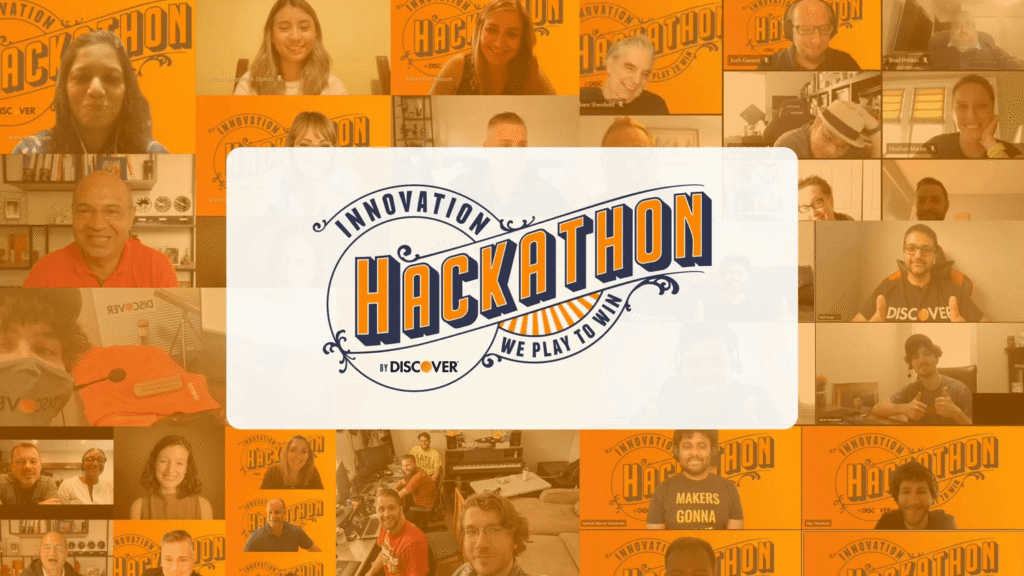
Discover collaborated with AngelHack on a company hackathon that engaged hundreds of employees across clearly defined challenge areas, supported by mentors and learning sessions. The structured themes, active support, and visible outcomes helped build a stronger culture of collaboration and innovation that lasted well beyond the 52-hour event.
Why Company Hackathons Fail (And How to Avoid It)
Most company hackathon failures are predictable — and avoidable. Knowing the patterns lets you design an event that feels meaningful rather than performative.
“Let’s innovate” with no north star
Many hackathons kick off with a loose call to innovate that isn’t tied to anything concrete, so teams end up chasing random ideas. Tie themes to a few strategic objectives and define what good outcomes look like upfront, so everyone knows what success means.
Great ideas, zero follow-through
Ideas get applause at demo day and then disappear, which teaches employees not to take future hackathons seriously. Commit early to a simple pipeline for quick wins, pilots, and strategic bets, and be upfront about how many ideas you can actually support.
Swag first, substance last
T-shirts and pizza don’t make up for unclear purpose or extra workload on top of a full plate. Position the event around impact, visibility, and learning so people see real benefits — in skills, recognition, and the chance to own something meaningful.
One department, one-dimensional ideas
When only engineers or one location participate, ideas miss the perspectives that make them actually workable. Design challenges that need different viewpoints and explicitly invite cross-functional, cross-location teams.
No playbook, no progress
Without structure, teams stall on where to begin or how polished their prototype needs to be. Clear briefs, mentor access, judging criteria, and a few checkpoints give people enough guidance to keep momentum going without feeling overscripted.
How AngelHack Can Help You Run a Company Hackathon
Running a hackathon well takes more than a theme and a demo day. It takes challenge design, stakeholder alignment, participant experience, and a post-event process that leadership will actually support. That is where AngelHack comes in.
With over 15 years of experience running innovation programs around the world, we have helped industry leaders across finance, technology, telecom, and more turn hackathons into a repeatable growth engine.
We can support your team to:
- Shape strategic themes and challenges that tie directly to your goals, metrics, and transformation agenda.
- Select formats, timelines, and engagement tactics that fit your culture, footprint, and regulatory reality, from single-site events to global hybrid programs.
- Design and facilitate the full experience so employees feel supported, energized, and included across roles, levels, and locations.
- Set up post-hackathon structures and playbooks so strong ideas move into pilots, accelerators, or product roadmaps instead of stalling after demo day.
If you are ready to turn a company hackathon into a core part of your innovation engine, reach out to our global team and let’s build a program people will keep coming back to.
Spark Innovation Within Your Company!
Partner with AngelHack to design and deliver a world-class hackathon that drives real innovation for your organization.
FAQ: Company Hackathon Questions Answered
How long should a company hackathon last?
Most run 24 to 72 hours. A one to two day in-person sprint works well for focused teams; a multi-week part-time format suits organizations where employees cannot step away from their day jobs for extended periods.
Who should participate?
Anyone with a stake in the challenge, not just engineers. The best teams mix technical and non-technical roles: product, design, operations, finance, and customer-facing staff all bring perspectives that sharpen ideas.
What budget do we need?
A focused internal event can run on $5,000 to $15,000 covering facilitation, catering, and prizes. Larger multi-site or hybrid programs typically range from $30,000 to $100,000+. The highest-impact budget line is almost always post-hackathon resources: time and funding to develop the winning ideas.
Who owns the ideas and IP?
In most company hackathons, all ideas, prototypes, and code belong to the organization. State this clearly in the brief before the event. For programs that include external participants or contractors, get IP terms agreed in writing at registration.
How should judging work?
Use an expert panel with a predefined scorecard covering business impact, feasibility, innovation, and strategic alignment. Avoid popularity votes; they favor well-networked teams over strong ideas. Share the criteria with participants upfront so teams know what they are building toward.
Can remote or hybrid teams participate?
Yes, with the right setup. Use a collaboration platform for async communication, a whiteboarding tool for ideation, and keep kickoffs and demo days live. Virtual mentor office hours and a dedicated questions channel help replicate the energy of an in-person event.
What is the biggest mistake companies make?
Not planning what happens to ideas after demo day. If teams cannot see what happens next, participation usually drops the next time around.