
A well-run hackathon is a business program. It generates working prototypes, developer adoption, talent pipeline, and community momentum. A poorly run one generates T-shirts and a Slack channel nobody checks.
The gap between those two outcomes is not resources or budget. It is decisions made or skipped at each phase of the event. This guide covers the full lifecycle across virtual and in-person hackathons, with actionable practices for every phase, real-world success stories from IBM and AWS, and a downloadable checklist to keep you on track.
Best Practices Before the Hackathon
Planning and Resource Alignment
Everything on event day traces back to decisions made weeks earlier. Before you book a venue or brief a sponsor, you need one clear answer: what does this program need to produce? That answer determines every choice downstream.
1. Define your why first
Are you running this for product adoption, talent discovery, community growth, or open innovation? Each goal leads to a different format, a different audience targeting strategy, and a different prize structure. A talent-discovery hackathon looks nothing like a community-growth event even if both run for 48 hours.
2. Choose your format strategically
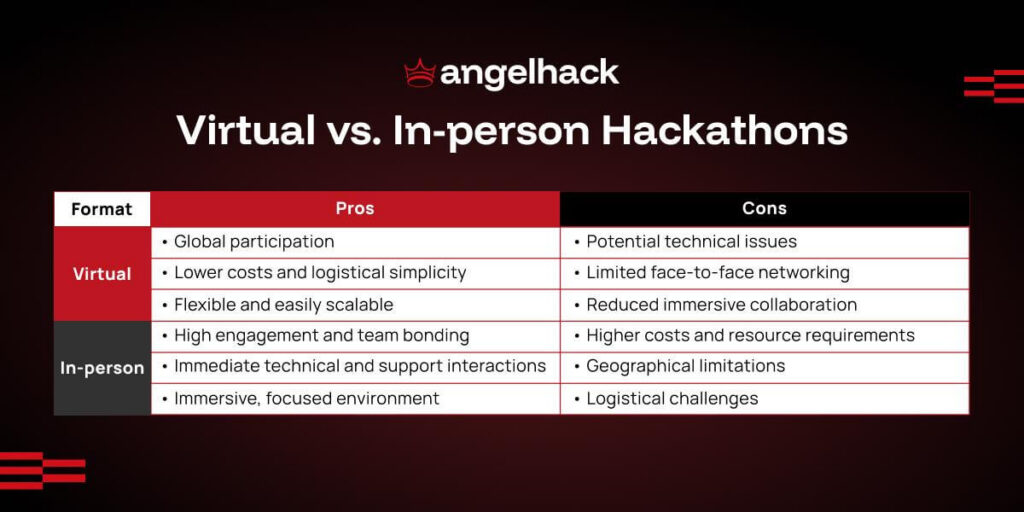
In-person events create depth. The energy, collaboration, and spontaneity are hard to replicate. But they limit geographic reach. Virtual formats open the door globally and require intentional community design to keep participants connected across time zones. Choose based on your goal, not convenience.
3. Set KPIs before anything is booked
The rookie mistake is measuring success by participant count. That number tells you nothing about pipeline quality or adoption. Define targets across three levels before you do anything else.
- Reach: registrations, impressions, referral traffic
- Engagement: submission rate, mentor utilization, session attendance
- Outcome: projects advanced, hires made, API adoption, partnerships formed
Without this structure, hackathons become one-off excitement with no lasting payoff. You collect submissions, nothing ships, and the budget does not come back next year.
4. Build your resource stack early
Set up API keys, cloud credits, and sandbox environments before the event opens. Participants should spend day one building, not troubleshooting access. One friction point in the first hour costs you participation quality for the entire event.
Promotion, Registration, and Onboarding
Promotion is where most organizers lose the right audience before the event even starts. The instinct is to default to channels that are easiest to manage. Discord, GitHub, and Reddit is where the builders actually live.
5. Choose promotion channels deliberately
Developer communities on GitHub, Discord, and Reddit outperform generic social campaigns for technical audiences. LinkedIn and email work for professional and enterprise segments. Meet your audience where they already are, not where it is easiest for you to post.
A pro tip: Tap into established hackathon networks like AngelHack’s global developer community for instant access to pre-vetted, competition-ready developers across regions.
6. Segment your promotion by audience type
Generic outreach produces low-quality registrations and high dropout rates. A student developer and a senior engineer respond to completely different value propositions. Write distinct messages for each and match incentives to motivations.
7. Design registration as your first quality filter
Most forms collect contact details and nothing else – that is a missed opportunity. Capture skills, tools, and domain experience at sign-up so team formation is based on real fit, not guesswork. Keep the form to five fields or fewer for easy registration.
8. Start onboarding before the event
Distribute starter kits, API docs, and mentorship schedules at least one week out. Use milestone emails, team formation channels, and pre-event workshops to reduce no-shows. Participants who arrive prepared build better – the difference shows up directly in submission quality.
Best Practices During the Hackathon
Virtual Hackathons: Platform Selection and Participant Engagement
The core failure mode for virtual hackathons is fragmentation. Registration on one platform, submissions on another, communication on a third. Participants get confused, confusion accelerates drop-off, and async formats have no physical energy to compensate.
9. Unify your platform stack
Registration, submissions, project tracking, and communication should live in one place. Fragmented tools create friction and accelerate drop-off, especially in async formats where there is no physical team next to you keeping energy high.
10. Default to async for global participation
Recorded workshops, written briefs, and async Q&A threads remove time zones as a barrier to participation. Pair that with a dedicated channel where teams share progress, early demos, and wins – it costs nothing and creates the shared momentum that keeps async participants from feeling isolated.
11. Run live engagement moments on a schedule
Structure them around the natural energy dips: hour 12, hour 18, the final stretch. A hosted AMA, a mini-challenge with a fast prize, or a simple emcee check-in is enough to reset momentum and remind participants the event is still happening.
Success Story: IBM’s Master the Mainframe
IBM’s Master the Mainframe is a good example of what async done right looks like. The year-long virtual competition reached 25,000+ developers across 154 countries – proof that a well-structured async format can scale globally without losing depth. Gamified, bite-sized coding challenges kept participants building progressively, while a dedicated Slack community grew by 4,000+ members and became a self-sustaining peer-learning space between events. The Grand Challenge Finale brought it full circle, connecting top builders directly with IBM recruiters and turning the competition into a live talent pipeline.
In-person Hackathons: Venue Setup and Participant Experience
In-person hackathon management is a different discipline. Most production problems that surface on event day were decisions made or skipped the week before.
12. Treat venue layout as strategy
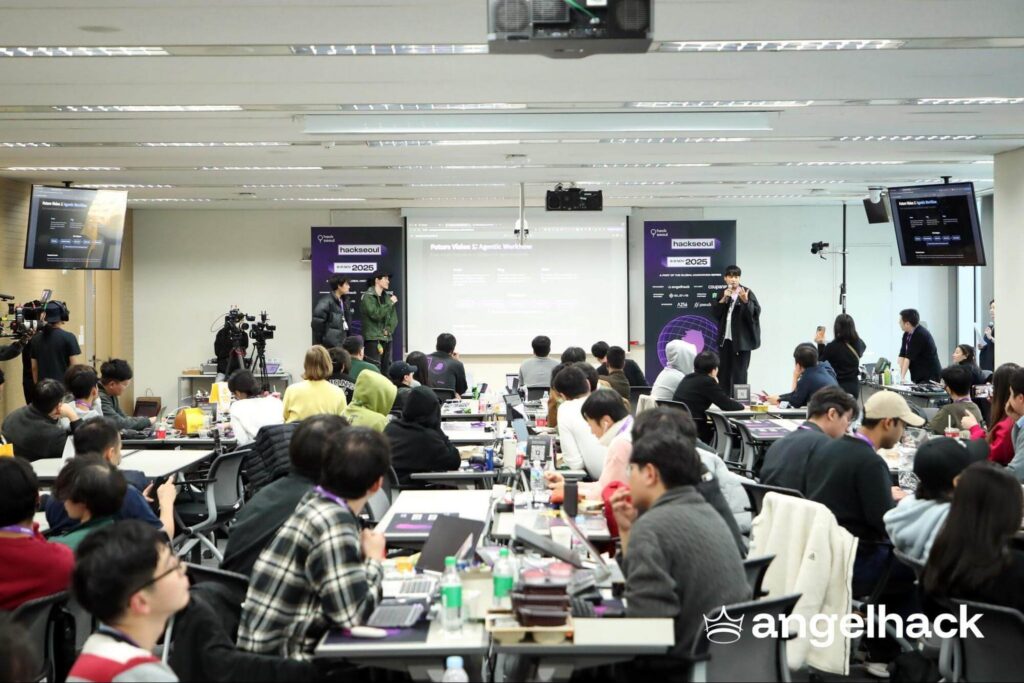
Co-locate teams working on similar challenges so ideas cross-pollinate. Place mentor stations at natural foot traffic points, not tucked in a corner where participants have to seek them out. Designate quiet zones for deep work and a separate space for team conversation. These are not comfort choices, but submission quality decisions.
13. Test everything before doors open
Plan for three times the expected device count on power and WiFi, and stress-test the network under realistic load. Have a backup power generator on standby. Test projectors, screens, and sound systems the day before, not the morning of.
14. Design specifically for first-timers
Buddy systems, clear signage, and a physical help desk reduce the anxiety that causes promising participants to disengage before they have started anything. A first-timer who feels supported in hour one is still building in hour twenty-four.
15. Plan food, drink, and rest areas seriously for overnight events
Scheduled meals and snack stations prevent the energy crash that kills output quality at the 18-hour mark. Designate a proper rest area. Participants who cannot recharge do not submit. Have a clear on-site emergency contact protocol; food-related incidents are more common than organizers expect.
16. Keep energy high throughout
A mid-event social activity, a stretch prompt at hour 18, or periodic emcee check-ins do more for output quality than pushing participants to grind through. Background music and a live progress board maintain the buzz that makes in-person hackathons feel different from working alone at a desk.
Success Story: AWS x AngelHack Global Hackathon Series
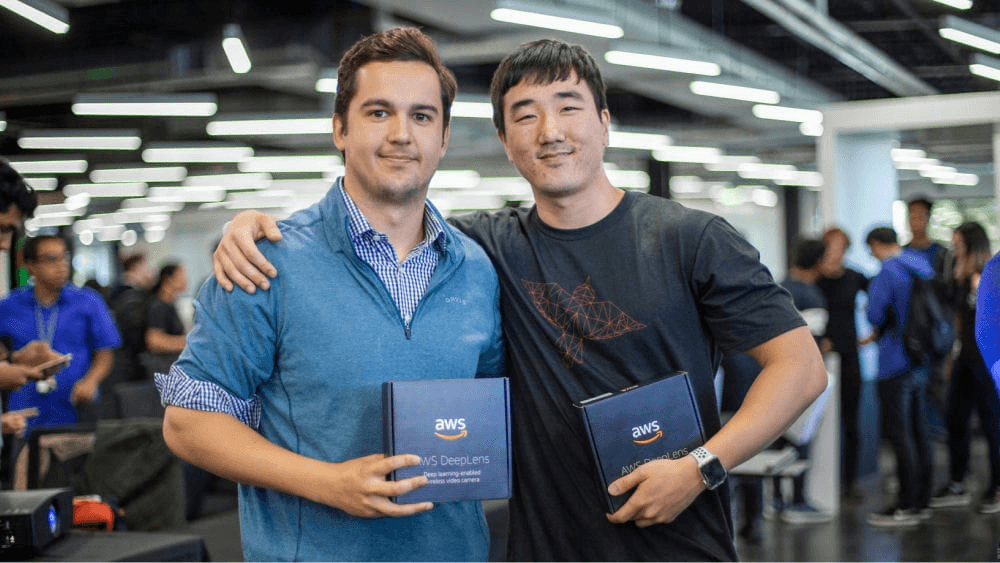
Managing a multi-city series across 25+ global locations requires a clear split between what stays consistent and what adapts locally. For the AWS x AngelHack program, the challenge design, technical bar, and participant experience were standardized across every city stop. Local teams handled on-the-ground energy. AngelHack provided technical support and mentorship at each location to make sure that held. The result was a program that built local community momentum and a unified global narrative at the same time.
Demo, Judging & Awards
Judging credibility is built before demo day, not during it. One of the most common mistakes is publishing criteria after registration opens. Participants build toward what they are evaluated on. Set the standard early and the submissions will meet it.
17. Decide on demo format upfront
Communicate the format clearly before registration closes. For virtual events, a recorded submission paired with live Q&A for finalists balances reliability and depth. For in-person, strict timeboxing works best.
- Virtual: recorded submission plus live Q&A for finalists
- In-person: 5 minutes to demo, 5 to 7 minutes live Q&A
18. Draft judging criteria before you open registration
Publish criteria publicly before registration opens so participants know exactly what they are building toward. Use four to five weighted categories and make the weighting reflect your program goal. Define what each score looks like per category so all judges are working from the same scale.
The common categories are:
- Technical complexity: how well-built and functional is the solution?
- Real-world impact: does it solve a problem that actually exists?
- Creativity: is the approach original or unexpected?
- Presentation quality: is the idea communicated clearly and confidently?
- Feasibility: could this realistically move beyond a prototype?
19. Enforce blind scoring in the first round
Anonymize submissions before judges see team names or institutions. This removes institutional bias faster than any other single intervention.
20. Run judge calibration before demo day
Share two or three sample projects and have judges score independently, then compare. Misalignments surface fast. 15 minutes of calibration prevents wildly inconsistent results across the panel.
21. Give the awards ceremony real weight
Recognize every team, not just the top three. The participant who pushed a working prototype at 3am deserves acknowledgment whether they placed or not. That recognition is what converts one-time attendees into long-term community members.
Best Practices After the Hackathon
Follow-Up and Long-Term Impact
The event is the starting point, not the finish line. What you do in the 48 hours after – and the 90 days that follow – determines whether any of it produces lasting value.
22. Act within 48 hours
Publish project repositories, send personalized follow-ups to standout teams, and post a public recap. Momentum drops fast. Waiting a week to follow up is waiting too long.
23. Measure outcomes at 30, 60, and 90 days
Raw submission count from event day is the least useful metric you have. The lagging indicators tell the real story.
- How many teams continued building post-event?
- How many connected with industry partners or entered accelerator programs?
- What was the adoption rate on the developer tools you promoted?
These numbers are what justify the next program. Without them, you are defending the budget with a headcount and a highlight reel.
24. Invest in your alumni community
A well-managed Discord or Slack channel keeps the community warm between programs, gives you a ready pool of engaged developers for future activations, and turns past participants into recruiters for the next cohort. The best programs treat every hackathon as the start of an ongoing relationship, not the end of a one-time event.
We’ve put together all these best practices in a two-page checklist so you can track every phase of your next hackathon. Download the Hackathon Best Practices Checklist.
How It All Fits Together
Pre-event work sets the quality ceiling, execution during the event determines output, and post-event follow-through determines whether any of it becomes a lasting ROI. A gap at any phase breaks the chain. The adoption falls short, the community loses momentum, and budget approval for next year gets harder.
Since 2011, AngelHack has been a trusted partner in developer relations, innovation programs, and talent recruitment for organizations including Microsoft, NASA, Databricks, AWS, Polkadot, Circle, and more. We design and run programs end-to-end or plug into specific phases – from hackathons, quests, bounties, to events and incubators – that help you educate, engage, and grow a developer ecosystem around your products.
Need Expert Support to Launch an
Impactful Hackathon?
Tell us the outcome you need and we’ll design a custom program to educate, engage,
and grow a community around your product