
The best AI hackathons do not just produce prototypes. They surface talent, validate ideas, and build communities that last well beyond the event itself. The hard part is designing one that actually delivers on those outcomes rather than just filling a weekend with activity.
With 94% of business leaders already facing AI-critical skill shortages (World Economic Forum), the stakes for getting this right have never been higher. This guide covers the five factors that separate a great AI hackathon from a forgettable one.
Decide The Format for Your Hackathon
Before you design a theme or pick a platform, make two decisions: who the event is for, and how it will run.
Public, internal, or customer?
- Public hackathons are open to external participants and work well for growing developer communities and driving product awareness
- Internal hackathons are for employees and best suited to driving innovation, cross-functional collaboration, and uncovering AI use cases within your organization
- Customer hackathons are closed events for existing customers, effective for driving product adoption and collecting targeted feedback
Virtual, in-person, or hybrid?
- Virtual hackathons offer global reach and are the easiest to scale, making them the default choice for most public and customer events
- In-person hackathons create stronger energy and connection but limit your participant pool geographically and typically produce prototype-level submissions due to the compressed timeline
- Hybrid hackathons combine both formats, often anchored around an existing conference or event, but require more coordination to ensure remote and in-person participants have an equally strong experience
Get these two decisions right and everything else follows. Theme, audience, platform, timeline, and rules all look different depending on who you are building for and how they will participate.
Build Your Hackathon Around the Right Theme
Theme
Your theme is the first thing potential participants see, and it shapes everything that follows. Before deciding on a format, start with your goal. There are three common goals that drive most AI hackathons, and each points to a different kind of theme:
- Innovation: You want participants to develop novel AI-powered solutions to real problems. Themes should define a clear problem space without prescribing the solution, leaving room for creative and unexpected approaches. For example: “Use AI to reduce friction in the small business lending process, any approach, any tech stack.”
- AI adoption: You want developers to build on your platform, API, or dataset and demonstrate its capabilities in real scenarios. Themes should be tightly scoped around your technology so submissions generate genuine product feedback. For example: “Build a production-ready AI application using our API that handles at least three real customer support scenarios, from intent detection to resolution.”
- Upskilling and AI literacy: You want participants to develop hands-on experience with AI tools and concepts, often including non-technical contributors. Themes should be accessible and well-supported with resources, with the goal of building confidence and capability. For example: “Use any AI tool to redesign one internal workflow in your team and show the before and after.”
Once your goal is clear, choose a theme format that matches it. The three most common formats each serve a different purpose are:
- Problem-based themes give participants a specific real-world challenge to solve. They work best for product validation because submissions tend to be focused, deployable, and directly useful. For example: “Reduce patient wait times using AI triage tools.”
- Technology-based themes ask participants to build using a specific tool, model, or stack. They work best when your goal is product adoption or developer education. For example: “Build an agentic AI workflow using LLMs and open APIs.”
- Domain-based themes frame the challenge around an industry or mission area without prescribing a specific solution. They work best for ecosystem growth because they attract a wider mix of participants. For example: “AI applications in supply chain, fintech, or education.”
When AI Singapore ran the PAN SEA-Lion Developer Challenge with AngelHack, the theme was grounded in a clear regional mission: build AI applications serving Southeast Asia’s many languages across four verticals – Healthcare, Finance, Education, and Public Sector. The specific challenges are what drove 796 registrations and 236 quality submissions.
Common mistakes to avoid:
- Going too broad leaves participants unsure where to start, leading to scattered, low-quality submissions
- Going too narrow limits creative problem-solving and discourages participation from adjacent skill sets
- Mismatching difficulty to your audience – like setting an advanced AI engineering theme for early-career developers – leads to frustration on both sides
A few tips before you publish:
- Test your theme with a small group first and ask: “Do you know what to build?”
- Provide example problem statements and specify which models or tools participants can use — this shapes who registers and what gets built
- Include a required dataset or API as a common starting point, and clarify your stance on AI coding assistants upfront
- Flag any compliance requirements early if your theme touches sensitive domains like healthcare or finance
Recruit the Right Mix of Participants
Once your theme is set, think carefully about who you want in the room. The right participant mix looks different depending on the type of hackathon you are running.
- Public hackathons need a broad but relevant pool. Reach developers, engineers, and domain experts through LinkedIn, X (Twitter), Discord and Slack communities, Reddit, and Hacker News. University and bootcamp networks work well for early-career talent.
- Internal hackathons benefit most from going beyond engineering. Recruit from product, design, operations, and business units through company-wide Slack, email newsletters, and leadership endorsement.
- Customer hackathons prioritize fit over volume. Work through customer success and account management channels to personally invite participants with the right context and motivation to build with your product.
This is where an agency with an established developer community makes a real difference. Rather than building reach from scratch, you tap into a network of experienced, hackathon-ready participants from day one.
Key participant types to target:
- Builders: Engineers and developers who implement the solution, write the code, and do the core technical heavy lifting
- Designers: UX and UI contributors who shape how the solution looks, feels, and communicates – making sure it works for real users, not just in a demo
- Domain experts: Non-technical participants who bring real industry knowledge, lived experience, and problem context that keeps the solution grounded in reality
- Product thinkers: Participants focused on use case viability, market fit, and whether the solution would actually work and scale in practice
Regardless of hackathon type, the strongest teams are rarely all-technical. A balanced team that includes builders, designers, domain experts, and product thinkers tends to produce submissions that are both technically strong and grounded in real economic value.
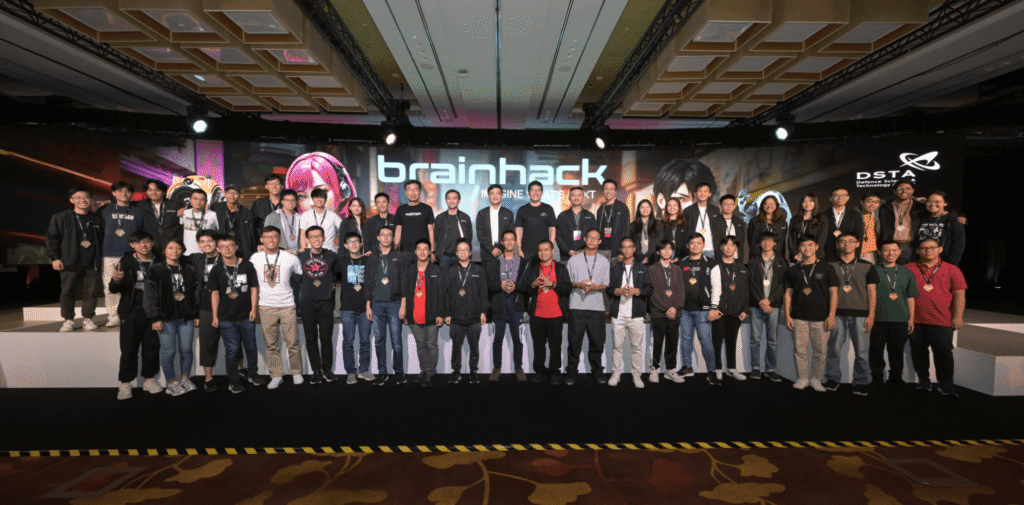
When AngelHack co-hosted the BrainHack TIL-AI competition for Singapore’s Defence Science and Technology Agency, the program was structured into Novice and Advanced tracks to widen the participant pool without lowering the quality bar. Out of 800 registrations, 32 teams reached the in-person semi-finals and finals, with 6 teams recognized as winners across both tracks.
How to shape your participant mix intentionally:
- Set team composition guidelines, such as requiring at least one non-technical team member
- Recruit through domain-specific communities, not just developer forums and coding groups
- Offer a beginner-friendly track or dedicated mentorship to widen your talent pool without lowering the overall quality bar
Set Clear Rules, Especially Around AI Use
Rules are not just legal boilerplate. In an AI hackathon, they are one of the most important design decisions you will make. The rapid growth of generative AI means the rules of engagement are less obvious than they used to be, and leaving them undefined creates confusion, inconsistent submissions, and judging disputes that are hard to resolve fairly.
- Be explicit about what qualifies as a valid submission. Can teams submit a proof of concept, or does the build need to be functional and closer to production-ready?
- Clarify which tools and models participants can use, including your stance on AI-assisted development tools like Cursor or GitHub Copilot
- Define what done looks like. Are prompt-only projects acceptable, or do you require working code and API integrations?
- For internal hackathons, include any compliance or security requirements that apply to how employees can use generative AI
- For public hackathons, rules must be legally specific to your event. Work with a lawyer or experienced partner to get them right – they cannot be copied from another competition
Clear rules reduce eligibility disputes, raise submission quality, and make judging significantly easier. Share them prominently and early, not buried at the bottom of the registration page.
Give Participants the Resources They Need
The quality of your submissions depends partly on how well you prepare participants before they start building:
- Share example code, sample applications, and relevant datasets early so teams are not starting from scratch
- Provide prompt engineering guides and tutorials on your platform or API to reduce the learning curve
- Give out API keys and cloud credits where possible. AI compute is not cheap, and participation should never require payment
- Set up a dedicated support channel on Discord or Slack so participants have somewhere to ask questions and get unblocked quickly
Keep Your Audience Engaged From Day One to Post-Event
Promotion gets people through the door, but communication keeps them engaged all the way through.Once your format, platform and audience strategy are set, build your communication plan around three phases.
Before: reach the right people and reduce drop-off
The biggest risk before your event is silence after sign-up. Participants who feel informed and connected are far more likely to show up prepared and ready to build. Use this phase to:
- Set clear expectations around theme, tools, judging criteria, and timeline
- Build a community space such as a Discord server or Slack channel where participants can connect and form teams before the event begins
- For in-person or hybrid events, coordinate with local tech communities, universities, and sponsor networks to amplify on-the-ground reach
- Send regular updates with useful content – mentor spotlights, resource links, and countdown reminders – to keep momentum going
During: keep energy up and blockers down
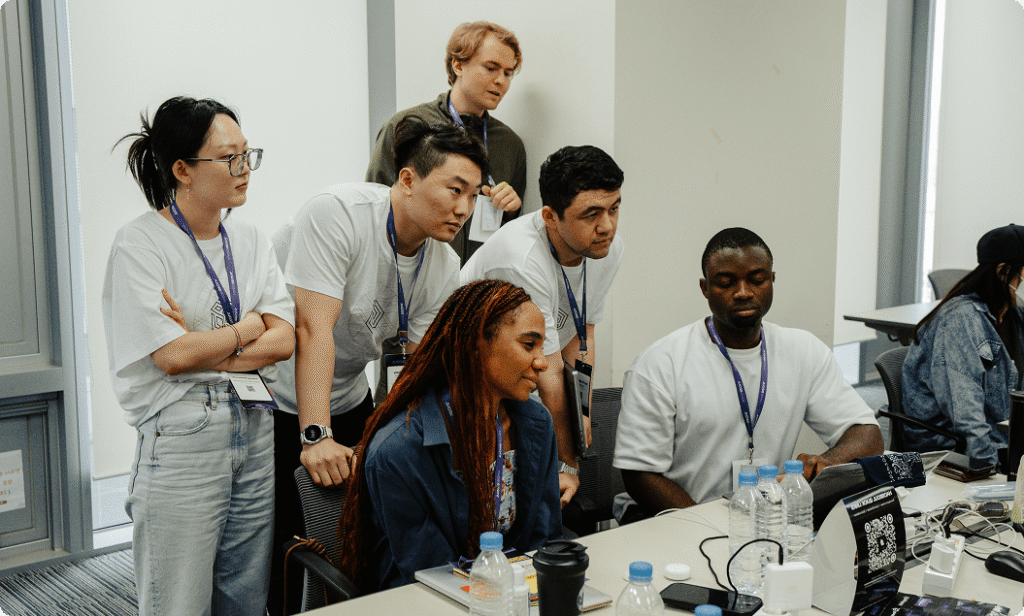
Participants are under time pressure. Clear, timely communication reduces friction, surfaces blockers early, and keeps teams focused on building rather than guessing. During the event:
- Designate one central channel for all official updates so participants always know where to look
- Make mentor and organizer support easy to access, with clear response time expectations
- Create moments of shared energy through mid-event check-ins, mini-challenges, or community calls
- For hybrid events, invest extra effort in making remote participants feel present rather than peripheral
- Send a halfway reminder with a submission checklist so teams know exactly what is expected before the deadline
After: close the loop and extend the impact
How you close out the hackathon determines whether participants come back, share their experience, or take their projects further. After the event:
- Announce results publicly and celebrate all participants, not just winners, through social posts, recap blogs, or a highlights video
- Share a post-event survey within 48 hours while the experience is still fresh
- Follow up with winning teams about next steps, whether that is a pilot opportunity, an incubator program, or an ongoing relationship
- Keep the community channel active with relevant content, opportunities, and future event announcements
- Publish a post-event report with key metrics and standout projects to build credibility for your next program
When Databricks ran their Generative AI World Cup with AngelHack, the goal was not just to fill seats – it was to attract the right people and keep them engaged through to submission. A targeted outreach strategy combined with participant vetting brought in 1,500 verified data professionals from 18 countries, producing real generative AI solutions across industries including biotech, legal tech, and construction.
Set Judging Criteria That Are Clear and Consistent
Judging criteria do two jobs at once. They tell participants what to aim for, and they give judges a consistent, defensible framework for evaluating submissions. Vague criteria produce inconsistent results and frustrated teams.
Core criteria that work well for AI hackathons:
- Technical execution: Does the solution actually work? Is the AI implementation appropriate and well-applied?
- Innovation: Does it approach the problem in a novel or meaningful way, rather than just applying a standard template?
- Impact potential: Could this realistically be built into a product, workflow, or service that creates value?
- Presentation quality: Is the demo clear, well-structured, and accessible to judges who may not have deep technical backgrounds?
- Theme alignment: Does the submission genuinely address the stated problem or domain?
How to structure your scoring:
- Assign weighted scores to each criterion based on your event goals. If talent discovery is your primary objective, weigh technical execution more heavily. If ecosystem building is the goal, weight impact potential and presentation higher
- Use a rubric with defined score ranges, such as one to five per criterion, to reduce subjective variation between judges
- Brief all judges before the event with concrete examples of what strong and weak submissions look like for each criterion
Common mistakes that undermine judging quality:
- Criteria that are too vague, like “creativity” with no further definition, lead to wildly inconsistent scores across judges
- Overweighting presentation penalizes technically strong teams who spent their time building rather than polishing slides
- Skipping judge calibration is one of the most common and costly mistakes – different judges will interpret the same criteria very differently without an alignment session beforehand
Measure What Matters After the Event
Reporting on outcomes is how you prove the program worked, build the case for your next event, and give sponsors and stakeholders something concrete to point to. The best post-event reports tell a clear story: here is what we set out to do, here is what happened, and here is what comes next.
A strong post-event report should cover:
- How many people registered versus how many actually submitted, and what that gap tells you about engagement and drop-off
- The spread of projects across tracks, categories, or regions, and what patterns emerged in how teams approached the theme
- Who participated, including countries represented, team composition, and how many were first-time versus returning participants
- The AI use cases teams explored, including the problems they tackled and the tools and approaches they used
- Standout projects worth highlighting, with links, short summaries, or direct quotes from the teams behind them
- Which projects are moving forward after the event, whether into pilots, incubators, or continued development
- For public hackathons: social reach, media coverage, and any growth in your developer community following the announcement
Find a Partner Who Fills Your Gaps
Most organizations approach hackathon planning with genuine intent but uneven capacity. You might have a sharp sense of your theme and goals but no developer community to promote to. You might have strong internal teams but no experience managing judging panels at scale. Or you might simply be running your first AI hackathon and want someone in your corner who has done it before.
A good partner fits into the gaps you actually have, whether that is one area or the whole program.
Think about where you need the most support:
- Theme and challenge design, if your team is new to hackathon formats
- Promotion and recruitment, if you do not have an existing developer community to activate
- Platform setup and management, if you lack the technical resources to configure and run the event end-to-end
- Mentorship and judging, if you need external domain expertise to complement your internal team
- Post-event follow-up, if you want help converting winning projects into pilots or longer-term partnerships
Questions worth asking any potential partner:
- Do they have hands-on experience with AI-specific themes and judging?
- Can they reach your target audience size and geography?
- What does their mentor and judge network actually look like?
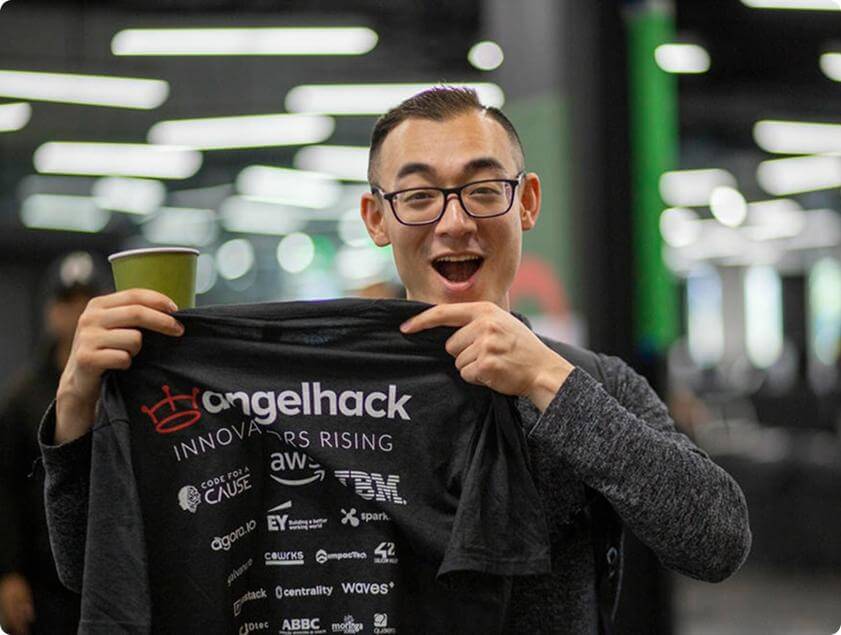
Since 2011, AngelHack has run hackathons and developer programs for some of the most recognized technology brands in the world. Our community of 500,000+ developers spans 100+ cities globally, which means we can help you reach the right builders, run a great event, and get real outcomes – wherever you need support.
Run Your Best AI Hackathon Yet
Get these five factors right – theme, participants, communication, platform, and judging – and your AI hackathon will produce outcomes that matter. New talent surfaces. Product ideas get validated. Developer communities grow. The design work is what separates a great event from a forgettable one, and you do not have to figure it out alone. Whether you need end-to-end execution or support in just one area, we are here to help.
Plan to Organize an AI Hackathon
That Attracts Top Talent?
We bring 500,000+ developers, 15 years of execution experience, and an end-to-end operational infrastructure built for results. Wherever you need support, from theme design to post-event follow-up, AngelHack has you covered.
Talk to UsFrequently Asked Questions
What is an AI hackathon?
A time-limited event where developers, designers, and domain experts build working AI-powered solutions around a specific theme or problem. Events run from 24 hours to several weeks, in virtual, in-person, or hybrid formats, producing functional prototypes that can be showcased or developed further.
How long should an AI hackathon run?
It depends on your goals. Shorter sprints of 24 to 48 hours work well for rapid ideation and prototyping. Longer formats of one to four weeks give participants more time to build polished, production-ready solutions, which is useful when working with complex AI systems or enterprise use cases.
How do you attract strong participants?
Promote through channels your target participants already use: developer Slack groups, Discord communities, LinkedIn, and domain-specific forums. Meaningful prizes, mentor access, and real datasets or APIs raise participation quality. Partnering with an agency like AngelHack gives you immediate access to an established developer community, skipping the cold start entirely.
What makes a strong AI hackathon submission?
The best submissions combine solid technical execution with a clear, accessible demo that addresses the theme directly. Mixed teams of builders, designers, and domain experts consistently produce more complete and compelling submissions than all-technical teams.
Do you need an agency to run an AI hackathon?
Not always, but most organizations have gaps in at least one or two areas. An agency like AngelHack can plug into exactly where you need support, whether that is full-service execution or just community reach, without requiring a full handover of the program.