🎯 TL;DR
- The prize mix determines how many and which builders register and the quality of the submission.
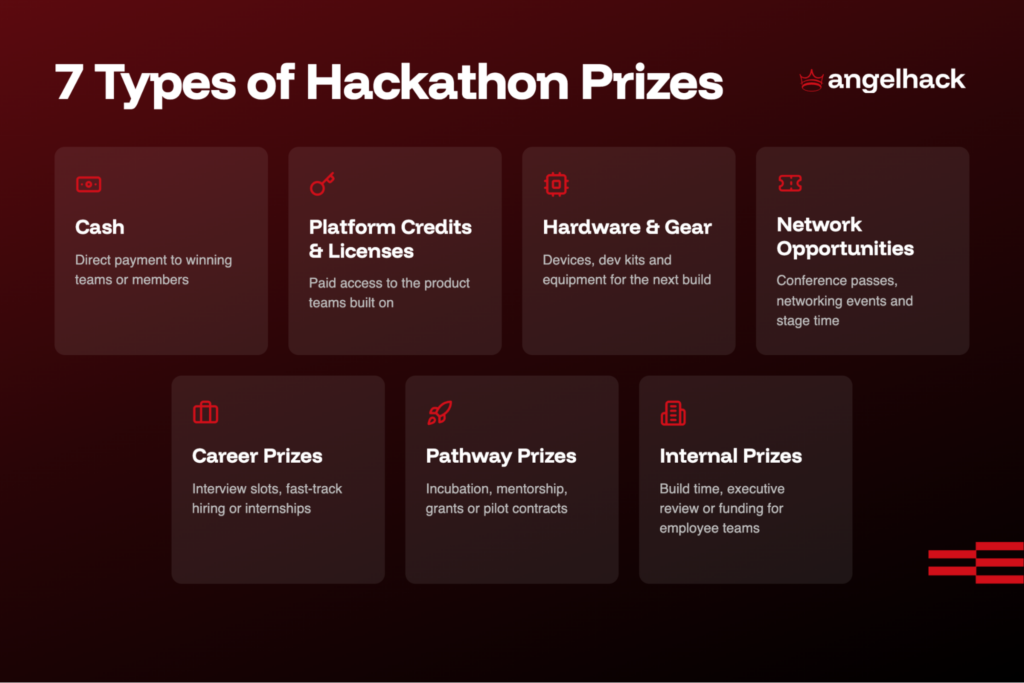
- Seven prize types cover the main options: cash, platform credits and licenses, hardware and gear, experiences, career prizes, pathway prizes and internal prizes.
- Set the program goal first, then choose the prize types that reward it, then the pool size.
- Publish prizes, judging criteria, eligibility and payout terms before registration opens.
Hackathon prizes are major pull factors of a hackathon, from cash and platform credits to mentorship, incubation and pilot contracts. Choose them well, and they do part of your program design for you. The prize mix shapes three outcomes:
- Who registers. Prizes are part of the offer participants see before they sign up, so the mix shapes who the event appeals to.
- What teams build. Prize categories tell teams which problems, products and criteria carry a reward.
- How many teams finish. The number of prizes, and what each one requires, decides whether teams outside the top places have a reason to submit.
Below, you will find the 7 prize types, what each one offers you and your participants, and how to match them to the goal your program is accountable for.
7 Types of Hackathon Prizes and When to Use Each
Prize types differ in what they cost to deliver, who they appeal to and what they leave behind after the event. A program can combine several, with the lead prize tied to your primary goal. Each type below covers its benefits, how to set it up and the programs it is best for.
💰 Cash
A direct payment to winning teams or individual members.
- Benefits: cash is the most straightforward and preferred reward for most developers. Winners can use it without conditions.
- How to set it up: decide how the pool splits across geographies, tracks or stages. Depending on the targeted regions of the hackathon, an attractive cash prize amount can vary widely. State whether prizes are paid per team or per member, and confirm tax and KYC requirements early.
- Best for: open events with a broad audience. Cash needs no prior commitment to your product, so it appeals to new and experienced builders alike.
Example: the Hedera Hello Future Trilogy split a combined $550,000 pool across three chapters, with $250,000 for the Apex finale.
🔑 Platform credits and licenses
Paid access to a product or service, usually the one the challenge is built on.
- Benefits: winners get a practical reason to keep building on your product. Their hosting, compute or API costs are covered after the event.
- How to set it up: give eligible teams a base allocation at the start, reserve larger packages for winners, and set expiry dates that leave time to keep building.
- Best for: product adoption programs, because the prize keeps winners building on your platform after judging.
Example: in the Databricks Building Intelligent Apps Hackathon, eligible teams received USD 700 in Express credits, and the program produced 80 working apps.
🔧 Hardware and gear
Devices, development kits and equipment, either your own products or tools that suit the challenge.
- Benefits: your hardware ends up with builders who have already shown they can work with it. Winners, in turn, receive equipment they can put straight into their next build.
- How to set it up: choose hardware that works with the product or theme teams built on. For international winners, budget for shipping, customs and local availability before committing to a device.
- Best for: in-person and hardware-focused events. Devices can be handed over on site, and they relate directly to what teams spent the event building.
🎟️ Exposure & networking opportunities
Travel, event tickets and stage time in front of a wider audience.
- Benefits: conferences and exclusive networking events give winners unique access to potential recruiters, investors or other talented builders.
- How to set it up: identify these opportunities early, and reach out to relevant internal or external parties to confirm whether they can set them up within their existing programs.
- Best for: multi-stage series and visibility-focused programs, because the prize itself becomes the next stage of the program.
Example: hackglobal 2024 sent city winners, such as Jakarta’s top team, to the Grand Finals in Singapore with trip expenses covered.
💼 Career prizes
Interview slots, fast-track recruitment or internship offers from the host company or a sponsor.
- Benefits: hiring teams see candidates produce real work under time pressure, not just describe it on a CV. Winners skip the cold application and go straight to a hiring conversation.
- How to set it up: agree the number of slots and roles with the hiring team before launch, and use judging criteria that show individual contribution. See how hackathons support talent recruitment.
- Best for: programs with a hiring goal. The competition doubles as a skills assessment, and participants know from the start what a strong result can lead to.
🚀 Pathway prizes
Incubation, mentorship, grants or pilot contracts that continue the work after the event.
- Benefits: the strongest projects stay in contact with your team and can progress toward a product or pilot. Winners gain structured support, whether mentorship, funding or a first customer.
- How to set it up: add feasibility and team commitment to the judging criteria, name the owner on your side, and confirm the start date before launch. An incubator program can serve as this route.
- Best for: incubator, innovation and pilot programs. Their goal depends on winning projects continuing after the event, and this prize builds that next step in.
🏢 Internal prizes
Rewards for employee hackathons, set and funded by the company.
- Benefits: winning ideas move into a defined review or development process, so the work continues past the final pitch. Employees gain recognition and resources from leadership.
- How to set it up: agree with executive sponsors what winners receive and when, and check reward policy with HR and legal early, since it can rule out some prize types.
- Best for: employee hackathons and corporate innovation programs, where the goal is ideas the company can adopt.
Example: UBS Innovate brought together 500+ employees across 5 cities. Top teams received funding and post-program accelerator support.
Match Your Hackathon Prizes to the Program Goal
A prize works when it rewards the specific action that moves your program toward its goal. Work through three steps before selecting any prize:
- Name the primary goal. Choose the single outcome the program is accountable for, such as product adoption, hiring or a pilot.
- Define the action that shows progress. Identify what teams must do during the event for that goal to advance, such as building on a named API or completing a working demo.
- Attach the prize to that action. Select the prize types that reward the action directly, and reflect the action in the judging criteria.
When a program serves more than one goal, lead with one and give it the largest share of the pool. Add a second prize type for the secondary goal, such as career prizes alongside cash, and weight the judging criteria toward the lead goal.
At a Glance: Program Goals and Prize Types
| Program goal | Action to reward | Prize types |
|---|---|---|
| Product adoption | Building a working project on your product | Platform credits and licenses, cash |
| Hardware or device adoption | Building on a specific device or kit | Hardware and gear |
| Developer talent | Showing individual skill on a defined problem | Career prizes, cash |
| Pilot or proof of concept | Solving a problem set by a business owner | Pathway prizes |
| Visibility and community growth | Presenting work to a wider audience | Experiences, platform credits |
| Internal upskilling | Applying new tools to real work | Internal prizes |
Dos and Don’ts for Hackathon Prizes
✅ Do:
- Set the number of prizes before the amounts. Fewer, larger prizes concentrate attention on the top places. More prizes give more teams a realistic target.
- Keep sponsor track rewards in check. There should be no large gap between sponsor tracks, and none should overshadow the main organizer’s prize.
- Reward completion as well as ranking, such as a participation certificate for every team that meets a defined standard, like a working demo, a public repo and a short video.
- Publish prizes, criteria and eligibility before registration opens, so teams can build toward them.
❌ Do not:
- Set the pool size before the program goal. The goal decides which prize types belong in the pool.
- Announce a career or pathway prize without an owner. Each one needs a named person and a committed timeline.
- Promise payouts you have not cleared. Confirm payment routes for every eligible country first.
A pro tip: Model your numbers with our hackathon budget calculator before you announce.
Final Words
A valuable and relevant prize, whichever type, is a major factor in attracting participants to your hackathon. Set the goal, choose the prize types that reward it, and size the pool last. Before you announce, confirm payout requirements, delivery dates and an owner for every prize.
Want a second pair of eyes on your prize plan?
We have designed and run hundreds of programs over 15+ years, from prizes and tracks to judging and post-event follow-up. Book a consultation with our team to plan the prizes and the full program for your next hackathon
TALK TO USFAQs
What do hackathon winners usually get?
Winners can receive cash, platform credits, hardware or experiences such as conference tickets. Programs with hiring or continuation goals add career and pathway prizes, including interview slots, mentorship, incubation or a pilot contract.
How much prize money should a hackathon offer?
There is no standard figure. Size the pool to your program goal, the number of prizes you plan to award and your budget, then model the total, including payout costs, before you announce.
How should you split a hackathon prize pool?
Set the number of prizes first, then fund the prize tied to your primary goal, followed by tracks and participation rewards. State whether each prize is paid per team or per member.
What are good non-cash hackathon prizes?
Platform credits, hardware, event tickets, interview slots, mentorship and incubation places. Match them to what winners need after the event.
Are cash or in-kind prizes better for hackathons?
It depends on the program goal. Cash is simple to announce but requires payout compliance for every winner. In-kind prizes connect winners to your product or program but need delivery planning.