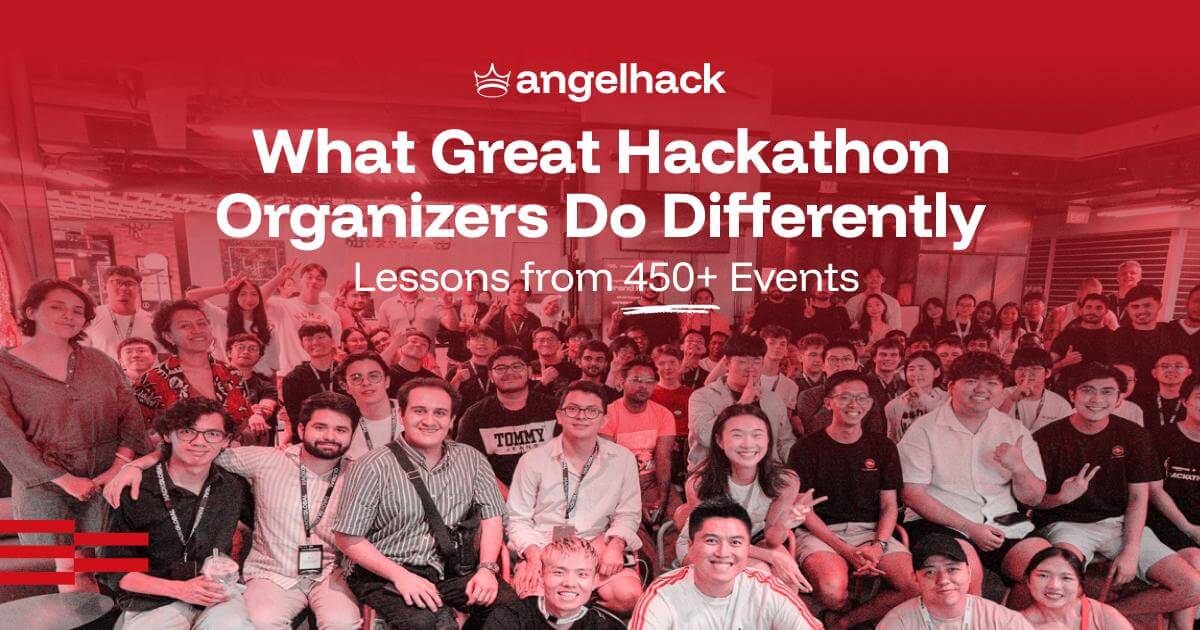

Most hackathons underperform. Not because of bad intentions, but because the same six mistakes repeat across every industry and every company size. Poor planning windows. Misaligned stakeholders. Generic recruitment. Underprepared event days. Unmeasured outcomes. A single event where a program should be. Across 450+ events run in 100+ cities, we’ve seen the patterns often enough to know they’re predictable. More importantly, they’re fixable. What follows is what actually works: six principles that separate forgettable events from programs that build lasting developer communities.
💡 Principle #1: Plan the Work Before You Work the Hackathon
Most programs fail in the four to six weeks of thin planning before event day, not on the day itself.
Companies start too late, assign no single empowered owner, and pile hackathon work onto existing full-time roles. Internal teams are capable, but they’re rarely experienced in challenge framing, developer community marketing, or judging criteria design. The result is predictable: blurry problem statements, lower-than-expected registration, inconsistent evaluation, last-minute operational scrambling, and leadership that walks away concluding “hackathons don’t work for us.”
Before you commit to a date, answer these honestly:
- Do you have one person who can dedicate 20–30% of their time for three to four months, with actual authority to make decisions?
- Are all relevant teams genuinely committed, or just nominally involved?
- Do you have backups for your MC, tech lead, and operations lead?
- Do you need to bring in an agency for dev marketing and event management?
Planning problems are fixable, but only if you catch them before the timeline compresses and every decision becomes a reaction.
💡 Principle #2: Align on Hackathon Outcomes Before You Set the Date
DevRel teams want community growth, product teams want API adoption, innovation leads want working prototypes, and HR wants a talent pipeline. When those goals stay implicit, every stakeholder measures success differently. Nobody ends up satisfied.
The fix is one alignment exercise before a single logistics decision gets made. Ask each team to complete: “This hackathon is a success if we…” Consolidate the responses, find the overlaps, and commit to one or two primary goals. Then build your program design, challenge framing, and judging criteria around those goals.
What a well-framed challenge looks like in practice:
- Starts from a specific user or workflow problem, not an abstract metric
- Is time-boxed to 24–72 hours with tools, APIs, and relevant data clearly documented
- Tells participants what they’ll gain beyond prize money: skills, portfolio projects, and direct access to subject-matter experts
Once goals are locked in, program design becomes a sequencing problem, not a guessing game.
💡 Principle #3: Recruit for the Right Builders, Not the Biggest Numbers
Low sign-up rates, high no-shows, and weak submissions aren’t a program problem. They’re almost always a recruitment problem.
Broadcasting to the widest possible audience produces generic applicants and submissions that miss the brief. Define the right participant profile before outreach starts.
Profile your builders first:
- What skill level does the challenge require: beginner, mid-level, or advanced?
- What technical domains are relevant: AI, Web3, fintech, full-stack, mobile?
- Are you targeting students, working professionals, or active open-source contributors?
Then reach them through channels they actually trust:
- Developer community platforms, Discord servers, and niche domain newsletters for domain-specific reach
- Partner networks and community ambassadors for warm, trusted introductions
- Social media for broad awareness, not as the primary recruitment channel
Get the message right:
- Lead with the problem to be solved and what participants will actually build
- Use language developers use, not marketing copy or corporate framing
- Don’t lead with prize money: it attracts prize-hunters, not builders
The right audience, reached through the right channels with the right message, determines submission quality before a single line of code is written.
Case in point: AI Singapore’s PAN SEA-Lion Developer Challenge recruited across social media, developer communities, and partner networks including AWS, Google, IMDA, and NVIDIA. By centering the challenge around multilingual AI problems relevant to Southeast Asian developers, the program reached 796 registrations and 236 submissions.

💡 Principle #4: Lock In Operations Before the Doors Open
The live event is where plans meet reality. It’s also where underprepared organizers lose the trust they spent weeks building.
Nail the operational basics:
- Stress-test Wi-Fi, power, seating, A/V, and critical developer tools before the day begins, not during it
- Build deliberate buffer time into the agenda — delays in judging and demo sessions cascade fast and visibly
Keep communication tight:
- Use one channel for all participant-facing updates
- Make announcements at predictable intervals
- Assign one person to timekeeping – when participants are left guessing, energy drops and teams disengage
Make mentoring a feature, not an afterthought:
- Schedule structured mentor sessions and dedicated product demo hours
- Teams that can’t get unblocked in the first few hours either drop out or produce weak final submissions
- Participants should understand the tech stack they’re building on during the event, not after it
Design the experience deliberately:
- Build networking moments into the schedule – developers come to meet peers and find collaborators, not only to compete
- A strong MC delivers more return than most individual line items in the budget
- Run mid-event check-ins to surface struggling teams early enough to help
- The closing ceremony should celebrate all participants, not only the top three
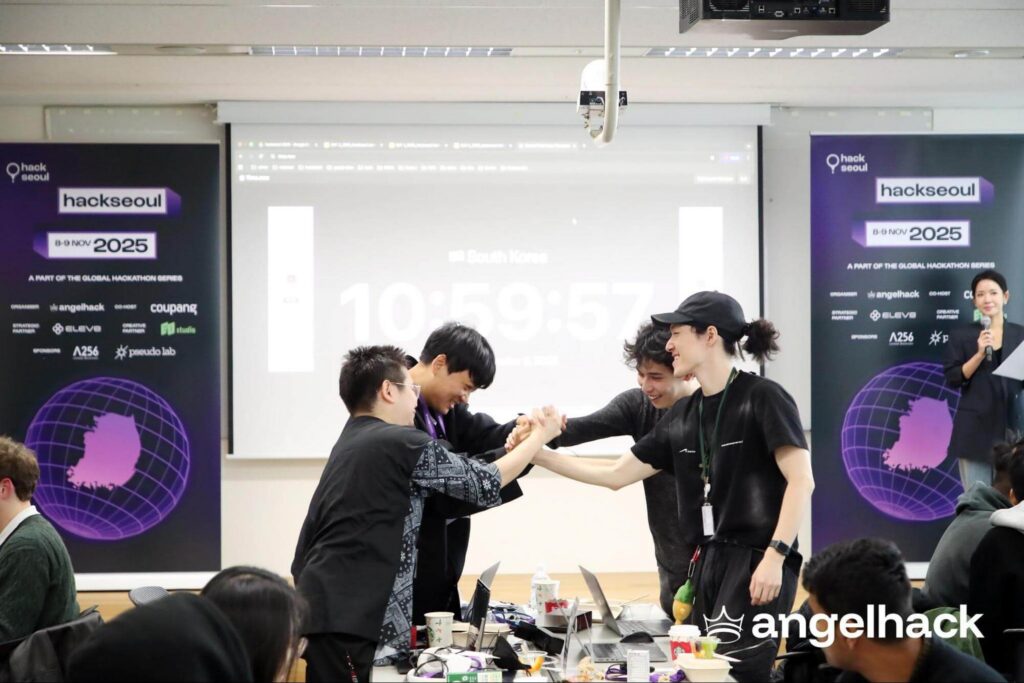
Case in point: hackseoul 2025 ran for the second consecutive year at Coupang’s Seoul HQ, with a mission: AI-driven products with a clear path to business impact, across five defined verticals. Tight operations gave developers exactly what they needed: no downtime, no scrambling, no energy lost to logistics. 120 participants, 24 hours, mentors from NVIDIA, KRAFTON, and Moloco, and a two-stage judging process that kept the standard high. The winning team walked away with a shoppable recipe AI and a committed follow-up from Coupang’s Corporate Development Team.
💡 Principle #5: Track Hackathon Metrics from Day One
Most programs can’t prove they worked because no one actually defined what success looked like before the event launched. Set a shared dashboard with all stakeholders at kickoff. What gets measured before the event is what gets reported after it.
These are the numbers that tell the real story:
Participation: The numbers that tell you who actually showed up and who followed through.
- Registrations vs. check-ins
- Active builders vs. sign-ups
- Submission rate, team completion rate, no-show rate
Engagement: How deeply participants connected with the hackathon while it ran.
- Mentor interaction rate
- Resource and documentation utilization
- Mid-event drop-off rate and community channel activity
Product adoption: The signals that connect hackathon activity to real developer ecosystem growth.
- API calls made, SDK downloads, new accounts created
- Smart contracts deployed, testnet accounts created, new wallet setups
- GitHub repos created, commits pushed
- App submissions, integration activations
Post-event: The outcomes that prove the program delivered beyond event day.
- Submission quality score against the judging rubric
- Net Promoter Score and returning participant rate at the next event
- Number of projects advanced to pilot or further development
That last category is the one most commonly neglected. Strong projects stall when no single person owns what happens next. Assign a clear post-event owner at the same time you assign an owner for event operations. Without that structure, event day is the end of the story. The best submissions don’t go anywhere.
💡 Principle #6: One Event Is Awareness. A Program Is a Pipeline.
A single hackathon surfaces builders and generates initial engagement. Running a second one, with quests and bounties in between, is what turns participation into a pipeline.
The program structure that consistently produces results:
- Learn & Earn quests: Structured challenges that reward developers for completing learning modules, building skills, and engaging with your product. Onboards and educates developers at scale.
- Bounty programs: Targeted tasks with defined rewards for specific builds or ecosystem contributions. Surfaces active builders and drives focused product adoption.
- Hackathons: Time-boxed competitive events where developers build working prototypes against a defined challenge. Surfaces the strongest builders and most viable ideas.
- Incubator & accelerator: A structured post-hackathon program that takes the best teams from working prototype to market-ready product, with mentorship, resources, and a path to pilot.
This is a strategic decision, not a budget decision. Each format serves a distinct function in the developer journey. Together they address every stage from first exposure to long-term ecosystem contribution.
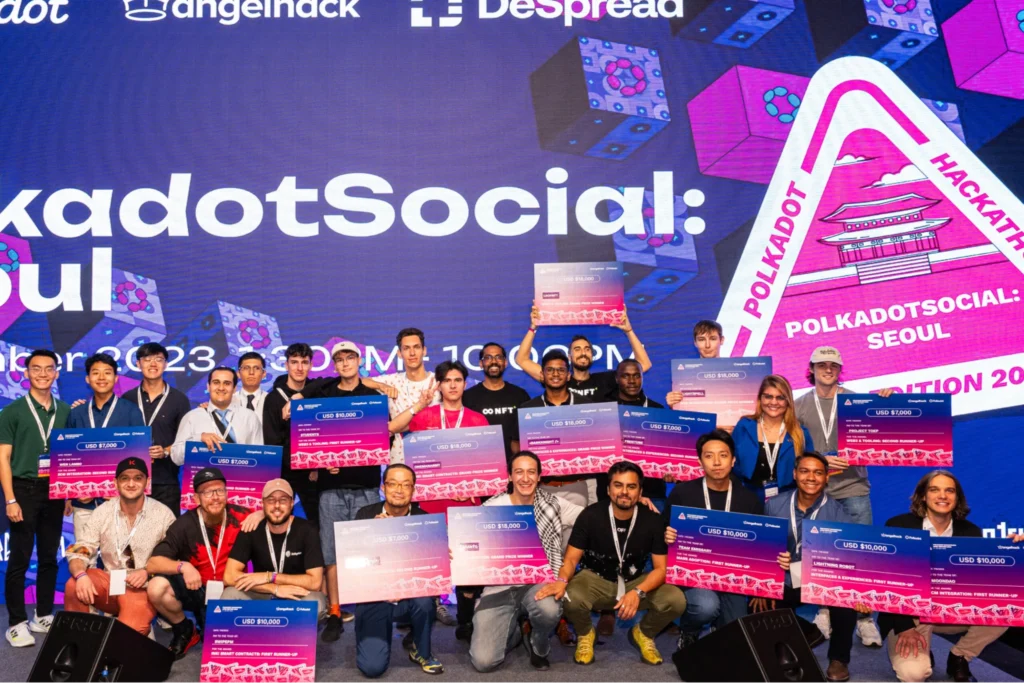
Case in point: Polkadot layered a global hackathon series with a Learn & Earn campaign and a three-city dotSocial event series in New York, Paris, and Seoul to bring the developer community together. The cumulative result: 3,000+ participants, 2,800+ learners, 300+ dApps built, and over $600K in developer rewards.
💡 Six Principles. One Audit. Start There.
The programs that build real developer communities aren’t doing something exotic. They’re applying six principles consistently, together, from the start.
- Plan the work before the timeline compresses
- Align on outcomes before any logistics are set
- Recruit for the right builders, not the largest audience
- Lock in operations before the doors open
- Track metrics from day one, not the debrief
- Build beyond a single hackathon into a program that compounds
The most practical next step: audit your last hackathon against these six before planning the next one.
Need Expert Support to Launch an
Impactful Hackathon?
If you want a hackathon built on 15+ years and 450+ events of what actually works, book a consultation with our team. Let us map out your goals, close the gaps, and build the program structure that gets you there.
Schedule Your Call