
AI hackathon ideas are easy to brainstorm, but the hard part is picking ones that translate into working prototypes a team can pilot post-event. The difference between a successful enterprise AI hackathon and a forgettable one usually comes down to two choices: the idea you build the challenge around, and how you draft the brief that lands the winning solution.
In this guide, we’re sharing 16 enterprise AI hackathon ideas worth running as a theme, plus the 6-step method we use to draft each one into a pilot-ready challenge. If you want the full end-to-end playbook for designing and running the event itself, see our AI hackathon guide → .
AI Hackathon Ideas for Growth & Customer Experience
Most growth problems aren’t strategy problems, they’re operational problems hiding behind a customer-facing surface. These ideas go after the operational layer where revenue actually leaks.
1. Personalization at scale
Right now, your customers see the same homepage, the same email, and the same product suggestions whether they’re a first-time visitor or a loyal buyer. That’s revenue left on the table every quarter. This is one of the easiest themes to run as an AI hackathon because the customer data already exists, success is measured in clear metrics like conversion and order value, and the result drops straight into the tools your marketing team already uses.
⚠️ Problem: Every customer sees the same content, no matter what they’re actually doing on your site.
🔧 Build: A smart recommendation tool that updates what each customer sees in real time, based on how they’re using your site or app.
✅ Outcome: A working prototype your marketing team can pilot to lift conversions and grow the average order size.
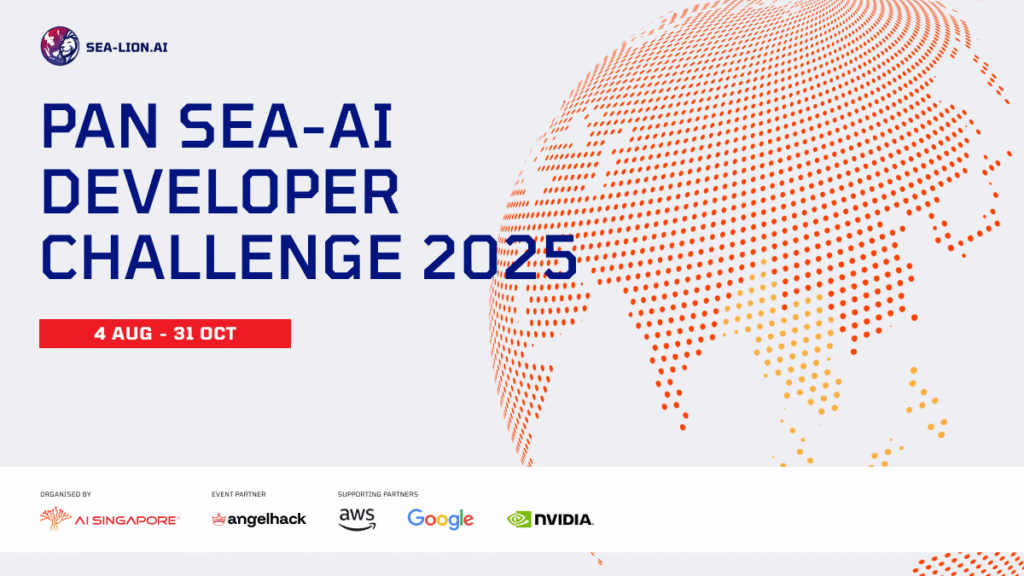
An example: The PAN SEA-LION Developer Challenge 2025 we ran with AI Singapore produced working prototypes across Education, Public Sector, and Finance tracks, all built on top of SEA-LION, the large language model trained specifically for Southeast Asian languages. Winning submissions delivered tailored learning experiences, citizen-service tools, and financial assistants in Indonesian, Thai, Vietnamese, Tagalog, and other regional languages where mass-market AI tools still default to English.
2. Churn prevention platform
Most customer success teams only find out a customer is leaving when the cancel email arrives. By then, the decision has been made. A hackathon flips that around by building a prototype that spots at-risk customers weeks earlier, while there’s still time and goodwill to keep them.
⚠️ Problem: Teams only learn a customer is leaving once it’s too late to do anything about it.
🔧 Build: A scoring tool that reviews each customer every week and flags the ones showing warning signs.
✅ Outcome: A working prototype your customer success team can pilot to save more accounts and grow retention.
An example: Open FinHack 2024, an international fintech hackathon, ran a dedicated “Personalised financial services” track focused on building behavioural-signal systems that brands can use to deepen engagement and retain customers.
3. Customer support multi-agent
Customer support teams spend much of their day on simple tickets that could be sorted, routed, or answered automatically. A hackathon team can make real progress on this in just 48 hours because the data already lives in your support tools, and success is easy to measure with metrics like response time and ticket volume.
⚠️ Problem: Most support tickets just need basic sorting and context, not a full human response, but they still pile up.
🔧 Build: An AI helper that sorts tickets, drafts replies, and passes the harder ones to humans with all the background already attached.
✅ Outcome: A working prototype your support team can pilot to answer customers faster and reduce the size of the ticket queue.
4. Sales prospecting agent
Your sales reps spend most of the week researching companies, looking up contacts, and writing intro emails. That’s hours of admin work which could be done automatically, freeing them up for the conversations that actually move deals forward.
⚠️ Problem: Sales reps spend more time on research and admin than they do on real selling conversations.
🔧 Build: An AI tool that finds the right companies to target, writes personalised intro emails, and updates the sales system on its own.
✅ Outcome: A working prototype your sales team can pilot inside your CRM to book more meetings and grow the pipeline.
5. Multi-agent CRM orchestrator
Every time a deal moves between teams (marketing to sales, sales rep to account manager, account manager to closer), there’s a risk something falls through the cracks. Most CRM systems don’t fix this because they were built to store information, not to manage handoffs. A hackathon team can build a smarter layer on top that keeps deals moving cleanly between stages.
⚠️ Problem: Deals get lost in the gaps when they move from one team or stage to the next.
🔧 Build: A set of coordinated AI helpers, one for each stage of the sales process, with clear rules for handing deals over.
✅ Outcome: A working prototype your revenue team can pilot on top of the CRM to close deals faster and win more often.
An example: Salesforce’s Agentforce Hackathon series, running across San Francisco, New York, London, Seoul, and a virtual round, briefs every team to ship custom AI agents on Agent Builder that solve a real CRM problem end-to-end.
AI Hackathon Ideas for IT & Operations
Cloud bills, downtime hours, and ticket queues quietly drain your margin every quarter, and most ops teams don’t have the bandwidth to chase them. These ideas hand that work to your hackathon participants.
6. Predictive maintenance agents
When a machine breaks down without warning, it costs money, delays customers, and often breaks the service guarantees you’ve made (your SLAs). This hurts most in factories, fleets, or warehouses where one broken machine can stop everything else. The good news is the sensor data needed to predict failures is usually already being collected, and what’s missing is an AI tool that watches it and warns the team in time.
⚠️ Problem: Unexpected machine failures cost money, break customer promises, and shut down whole operations.
🔧 Build: An AI tool that reads sensor data, spots early signs of trouble, and creates a repair ticket before the machine breaks.
✅ Outcome: A working prototype your maintenance team can pilot to keep equipment running longer and cut downtime hours.
7. IT helpdesk copilot
Your IT team spends much of its day on the same simple requests, like resetting passwords, granting access, and unlocking accounts. None of these really need a human, but they pile up and slow down everything else. A hackathon can pick just one ticket type and build a working AI helper that handles it from start to finish.
⚠️ Problem: IT tickets back up because routine requests like password resets still need a human to handle them.
🔧 Build: An AI helper that sorts incoming tickets, replies automatically, and resolves common requests through your existing IT systems.
✅ Outcome: A working prototype your IT team can pilot in your help desk software to resolve tickets faster and reduce queue size.
8. Process automation
Finance, operations, and back-office teams lose hours every week to the same routine tasks, like chasing invoices, reviewing expenses, and reconciling accounts. Most of this should have been automated long ago. A hackathon can focus on a single workflow and build a working tool that handles it from start to finish in a weekend.
⚠️ Problem: Routine paperwork like invoices, expenses, and reconciliations drains hours from teams every week.
🔧 Build: An AI helper that handles one specific workflow, like invoice processing or expense review, from start to finish.
✅ Outcome: A working prototype your finance or operations team can pilot to cut hours of routine work each week.
An example: Google’s Agent Development Kit (ADK) Hackathon drew 10,400+ participants from 62 countries to orchestrate multi-agent systems for process automation, data analysis, and content generation.
9. Cloud cost and Financial Operations (FinOps) agent
Cloud bills tend to grow faster than the business itself, and most of the waste hides in places nobody is looking, like old servers no one turned off, oversized services, and duplicate test environments. A FinOps agent (one that watches and manages cloud spending) is a high-value hackathon theme because the savings show up on your next bill, not next year.
⚠️ Problem: Cloud spending grows faster than actual usage, with waste hidden across hundreds of services and accounts.
🔧 Build: An AI tool that reviews your spending patterns, spots waste, and recommends cheaper setups.
✅ Outcome: A working prototype your platform team can pilot in your cloud dashboard to cut spending without cutting service.
AI Hackathon Ideas for Workforce & Talent
Workforce problems rarely show up as a single number on a dashboard, which is exactly why they’re so hard to fix. These themes turn onboarding and engagement problems into hackathon challenges your team can score against.
10. Workforce optimization
Building staff schedules and shift plans takes hours every week, and the people working those shifts are often unhappy with the result anyway. This hurts most in businesses where having the right people in the right place at the right time directly affects revenue. A hackathon team can build an AI tool that drafts schedules based on demand, skills, and who’s available.
⚠️ Problem: Scheduling staff and planning shifts wastes time and frustrates frontline teams.
🔧 Build: An AI tool that drafts schedules using customer demand, employee skills, and availability.
✅ Outcome: A working prototype your operations team can pilot to improve coverage and save planning hours.
11. Knowledge sharing copilot
The most useful information in your company is usually stuck where new hires can’t easily find it. It lives in senior employees’ heads, old Slack threads, and closed support tickets. A hackathon team can build a smart helper that answers questions using your internal documents, chats, and tickets, while showing exactly where each answer came from.
⚠️ Problem: Important company knowledge is scattered across people, chat tools, and old tickets, far from the new hires who need it.
🔧 Build: An AI helper that searches internal documents, chats, and tickets to answer questions, and shows where the answer came from.
✅ Outcome: A working prototype your team can pilot in your everyday work tools to speed up onboarding and reduce repeat questions.
An example: We ran this theme as the Databricks Generative AI World Cup, and participants shipped exactly this kind of prototype. Their submissions included AI helpers that pull answers from a company’s own data (a technique called retrieval-augmented generation, or RAG), internal knowledge tools, and copilots that connect large language models to enterprise data, all built on the Databricks platform.
12. Interactive training and onboarding
When teams are spread across many locations, hands-on training gets harder to deliver consistently. Quality often drops the further people are from headquarters. AI-driven training scenarios adapt to each learner, which means you can train more people well without hiring more trainers or stretching your Learning & Development budget.
⚠️ Problem: Hands-on training is hard to deliver consistently across teams spread across many locations and shifts.
🔧 Build: AI-driven training scenarios for safety, technical skills, or customer interactions that adjust to each learner’s level.
✅ Outcome: A working prototype your training team can pilot in your learning system to get people up to speed faster.
An example: Microsoft’s AI Classroom Hackathon briefed 3,700+ undergraduate and graduate students from 100+ countries to reimagine education in the era of AI, building intelligent learning applications on Azure AI.
AI Hackathon Ideas for Risk, Legal & Finance
Risk, legal, and finance is where bad processes turn into expensive findings, and where good AI agents quietly turn into defensible savings. These ideas pair the highest-stakes workflows in your business with prototypes your team can actually pilot.
13. Contract review copilot
Every contract that sits in legal review slows down a deal. Over time, small inconsistencies between agreements add up to real legal risk that no one is catching. A hackathon team can build an AI helper that checks each contract against your standard playbook, flags anything that doesn’t match, and suggests changes.
⚠️ Problem: Contract reviews slow down deals, and small differences between agreements add up to real risk over time.
🔧 Build: An AI helper that checks contracts against your standard rules, flags differences, and suggests fixes.
✅ Outcome: A working prototype your legal team can pilot to speed up reviews and auto-approve standard contracts.
An example: LegalTechTalk’s 48-hour London hackathon briefs teams to build agentic AI systems that tackle real legal-world challenges, with contract review consistently at the centre of the work.
14. Fraud detection swarm
Most fraud detection systems rely on one model that scores every transaction. The problem is they often miss new types of fraud while blocking real customers by accident. A smarter approach uses several AI helpers, each watching a different signal, and lets them vote on whether a transaction looks risky. That’s much closer to how a human fraud team would actually think.
⚠️ Problem: Single-model fraud systems often miss new fraud patterns and block real customers at the same time.
🔧 Build: A group of AI helpers, each watching one type of warning sign, that vote together on whether something looks risky.
✅ Outcome: A working prototype your fraud team can pilot in your payments system to catch more fraud and block fewer real customers.
15. Financial close copilot
Month-end close (the process of finalising the books each month) is mostly manual, full of errors, and pulls your finance team off strategic work for a full week. A hackathon team can build a tool that handles one specific part of close, which is enough to prove the value before tackling the whole process.
⚠️ Problem: Closing the books each month is manual and slow, and creates rework that pulls finance off strategic work.
🔧 Build: An AI helper that matches account entries, flags unusual numbers, and writes explanations for the unusual ones.
✅ Outcome: A working prototype your finance team can pilot in your accounting system to close the books faster each month.
An example: The IFIF (India Finance and Innovation Forum) AI Hackathon runs as an outcome-driven sprint that briefs developers and fintech professionals to build AI-native applications for real institutional challenges across banking, capital markets, and fintech.
16. Compliance monitoring agent
Most compliance problems only show up during an audit, which is the most expensive possible moment to find out about them. An AI agent that watches transactions and communications can spot warning signs as they happen, turning compliance from a quarterly cleanup job into an everyday safeguard.
⚠️ Problem: Compliance problems usually only get caught in audits, long after they happened.
🔧 Build: An AI tool that watches transactions, messages, and system events for signs of regulatory risk and flags them immediately.
✅ Outcome: A working prototype your compliance team can pilot to catch issues earlier and reduce audit findings.
How to draft your AI Hackathon challenge

The ideas above only work if the challenge brief lands them in a real system post-event, so here’s the 6-step method we use to draft every one of them with our enterprise clients.
1. Define the business outcome
Pick one decision the prototype should inform, and write the KPI as baseline, target, and time horizon. If you can’t write that down clearly, the theme isn’t ready to run yet.
2. Check data readiness
Map the sources, owners, freshness, and privacy class. Confirm participants can actually access the data during the event without legal needing a separate review week to clear it.
3. Map AI capability to outcome
LLM, agent, classical ML, vision, or rules. Pick the smallest tool that solves the problem instead of the most fashionable one for the news cycle.
4. Frame the MVP and demo
Write one paragraph on what a working prototype must show on stage, then cut anything that isn’t load-bearing for the decision your sponsor needs to make.
5. Build the scoring rubric
Weight business impact, feasibility, technical execution, and demo quality. Brief judges before kickoff so participants know what wins from day one.
6. Plan the pilot pathway before kickoff
Name the cross-functional team that owns the winning prototype the Monday after demo day. Without a named owner, no prototype gets piloted no matter how good it was.
Final Words
A well-run AI hackathon doesn’t just produce a demo. It produces working prototypes your team can pilot, fresh ideas your roadmap hasn’t seen, and a culture that gets faster every time you run one. Your first step to get there: pick the right theme, write a tight brief, and name your pilot owner before kickoff.
AngelHack has run 450+ hackathons over 15 years for companies like Microsoft, NASA, UBS, P&G, and we’d love to design the next one for you. Tell us the outcome you need, and we’ll build the program that gets you there.
Plan to Organize an AI Hackathon
That Attracts Top Talent?
AngelHack has run 500+ hackathons globally, designs programs backwards from a specific business decision, and brings a network of 300,000+ developers to every program we run. Tell us the outcome you need. We’ll design the program that gets you there.
Consult with AngelHackFrequently Asked Questions
How do we source ideas for an AI hackathon?
Start with the problems your teams complain about every week, like slow report cycles, knowledge buried in Slack, or repetitive customer queries. Then scan recent submissions from public AI hackathons in your sector to see what others are testing. Finally, ask senior leaders for the strategic bets they’d want someone to prototype. The best themes usually sit where all three overlap.
What are the most common AI hackathon ideas for corporate teams?
Most enterprise AI hackathon ideas cluster in four areas. Growth and customer experience is everything customer-facing, from acquisition through to retention. IT and operations covers the systems and workflows that keep the business running. Workforce and talent is about how employees learn, work, and share knowledge. Risk, legal, and finance is the high-stakes work where mistakes are expensive. Pick the cluster that maps to your biggest pain point, then narrow to a specific brief from there.
How do we pick the right AI hackathon idea for our organisation?
Start with the objective. AI hackathons can ship working prototypes, validate ideas, generate content, upskill teams, or surface talent, and the right theme depends on which outcome you’re after. From there, check that the team has the inputs the build actually needs (data, APIs, tools, or knowledge sources), bandwidth to follow through post-event, and a scope tight enough to ship in 24 to 72 hours.
How long should an AI hackathon run?
The build sprint is typically 24 to 72 hours, with 48 the sweet spot for most corporate teams. But the program around the sprint matters more. Plan 4 to 8 weeks for theme design, registration, and briefing before kickoff, then 30 to 90 days post-event for evaluating prototypes and launching pilots. The sprint is just the middle.
What measurable outcomes can we expect from running an AI hackathon?
The right metrics depend on the objective. For prototype-to-pilot hackathons, track working prototypes shipped, pilots launched within 90 days, and time or cost saved once a prototype goes live. For idea-validation or content sprints, count concepts added to the innovation pipeline or assets produced and reused post-event. For upskilling and talent programs, track participants engaged, skills certified, and new talent identified internally or externally.