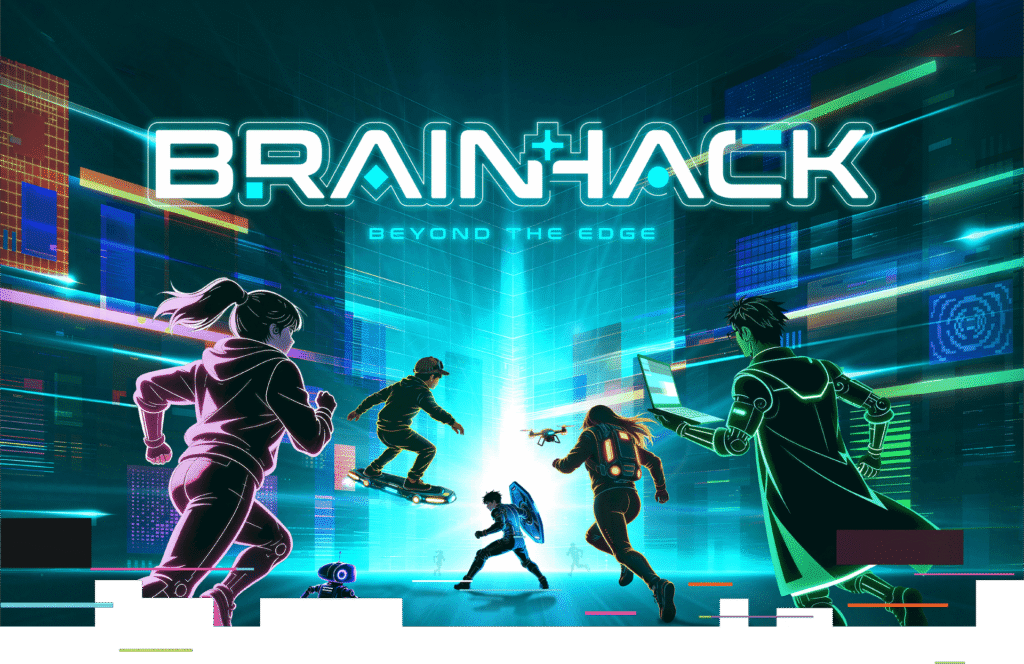
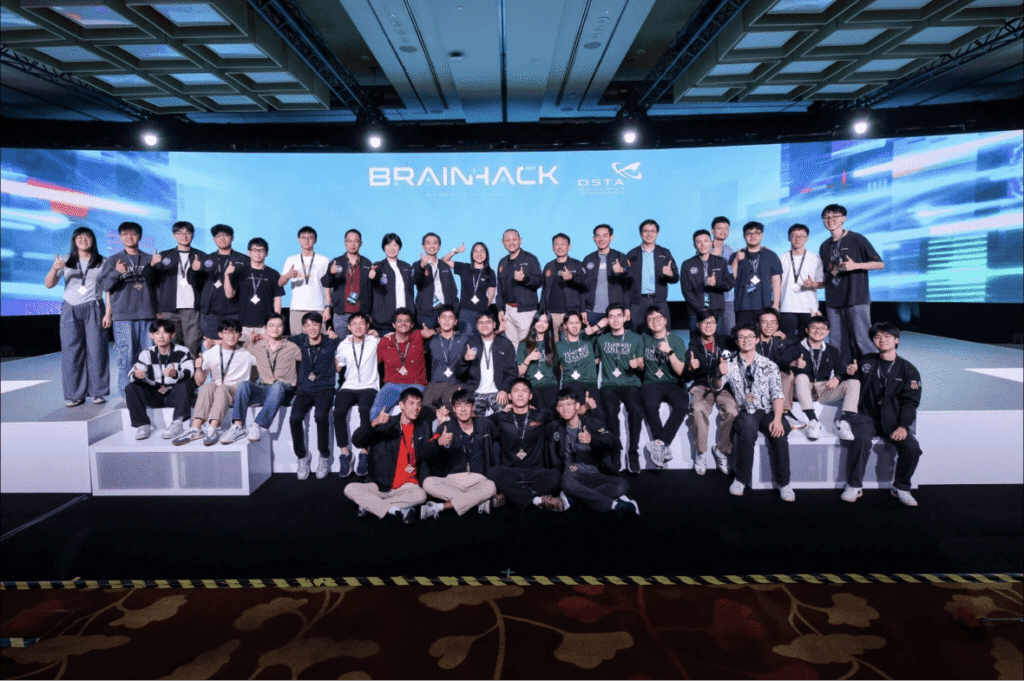
DSTA BrainHack is Singapore’s national showcase of defence technology. Its TIL-AI track (Today I Learned AI) has been designed and run by AngelHack for three years running. In 2026, it drew 774 participants across 68 teams, with 40 reaching the in-person finals at Marina Bay Sands.
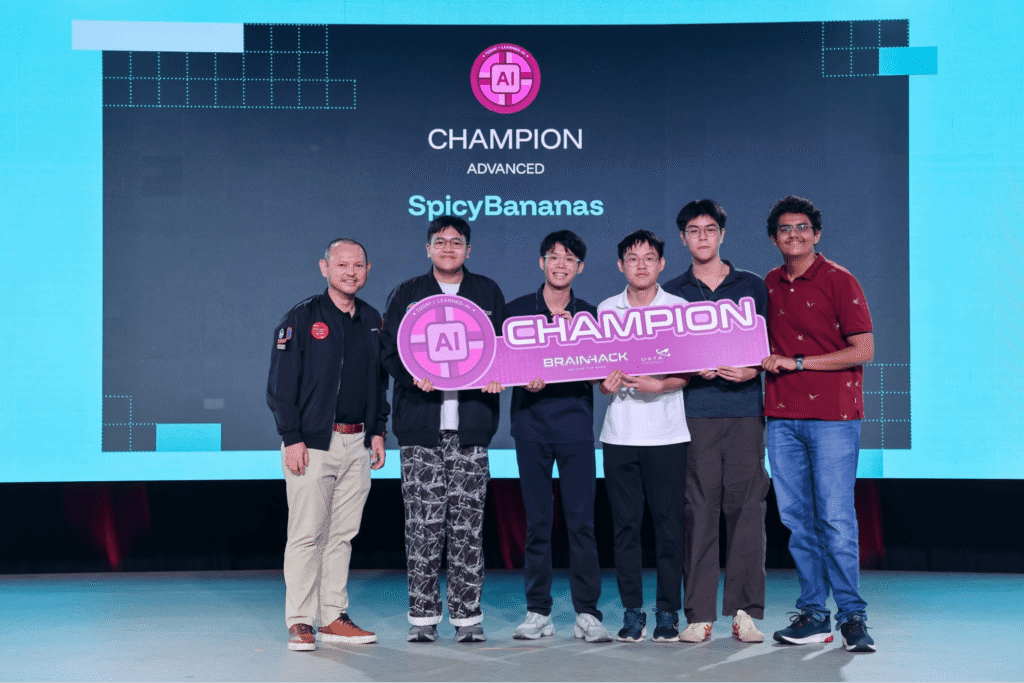
Daksh Thapar, Ooi Jing Shun, and Ranen Sim were three of the five students behind Team SpicyBananas, winners of the Advanced track. Here’s how they built for the fight in the finals.
Jing Shun made a promise after BrainHack 2025. His team had placed third in the Novice track, and he told them they’d return for first in Advanced. Twelve months later, five Ngee Ann Polytechnic students did exactly that, ahead of university teams with deeper AI backgrounds and more resources.
Advanced teams built across all four TIL-AI tasks:
🎙️ Speech recognition on messy multilingual audio
👁️ Computer vision that spots vehicles in cluttered images
📄 Language models that find the right answer across a pile of documents
🤖 Autonomous agents fighting five rivals on a maze they can only partly see
How did SpicyBananas work on the 4 tasks of the Advanced track?
Jing Shun: We developed competitive solutions across all four tasks while balancing school, internships, and everything else. I was proud of how we turned our experiments into a complete system that could run reliably during the finals. We worked with TensorRT optimisation, FastAPI microservices, and newer multimodal and computer-vision models, some of them completely new to us. It wasn’t about a good score in an isolated notebook. We had to optimise the models, connect the components, and make sure everything ran inside the competition’s hardware and time limits. Seeing all those parts work together was extremely satisfying.
What sets SpicyBananas apart?
Daksh: We initially divided the main tasks according to each person’s strengths, experience and interests, and then gave each member real ownership of their area. We built for the live final, not the public leaderboard. The qualifiers rewarded clean accuracy, but the finals were adversarial, with other teams actively trying to break our systems. My cybersecurity background pushed that thinking, so for computer vision I took a slower, harder model because it held up when images were noised or cluttered. In security, asking how a system will fail under attack isn’t an afterthought. It’s one of the first questions you ask.
「 In security, asking how a system will fail under attack isn’t an afterthought. It’s one of the first questions you ask 」
Ranen: What probably set us apart was how many ideas we were willing to test, including different model architectures and training styles. Manual investigation of results also allowed us to correct certain behaviour that agents may not reliably catch.
What are you most proud of building?
Daksh: My own favourite was from training our CV model against adversarial attacks. The hard part was always the accuracy but it was also trying to stop the model from seeing things that were not there. We expected other teams to clutter their images with fake objects designed to fool us, so we trained the model on exactly that. Watching it stop reacting to fake patterns while still catching real ones through noise and blur was more satisfying than any score.
What was the hardest part?
Daksh: The tension between looking good and being reliable. The faster vision models were easy to train and performed excellently on clean images, then degraded badly the moment those images were noised or cluttered. The model I eventually chose was slower and far harder to tune, but it held up under attack. One of the ways we fixed this was to stop hoping for robustness and start training for it directly. We fed the detector the exact attacks we expected to face. Underneath that sat the real grind, which was time.
Ranen: One of the issues that spiralled more than we expected was deciding which reinforcement learning checkpoint was actually the best for submission. Training rewards and our internal evaluations did not always align with the official BrainHack evaluation. Eventually we relied on repeated official evaluations while using our internal results to shortlist promising checkpoints.
What did the finals feel like?
Daksh: The finals were the most memorable part. The separate models stopped being isolated submissions and became one live system. In the Marina Bay Sands ballroom, robots were physically moving across the floor while teams gathered around to watch and cheer. It felt closer to a sporting event than a conventional hackathon. Seeing something we had built quietly in terminals late at night suddenly hold up under live pressure in front of an entire room made the months of work feel real.
What has winning set in motion?
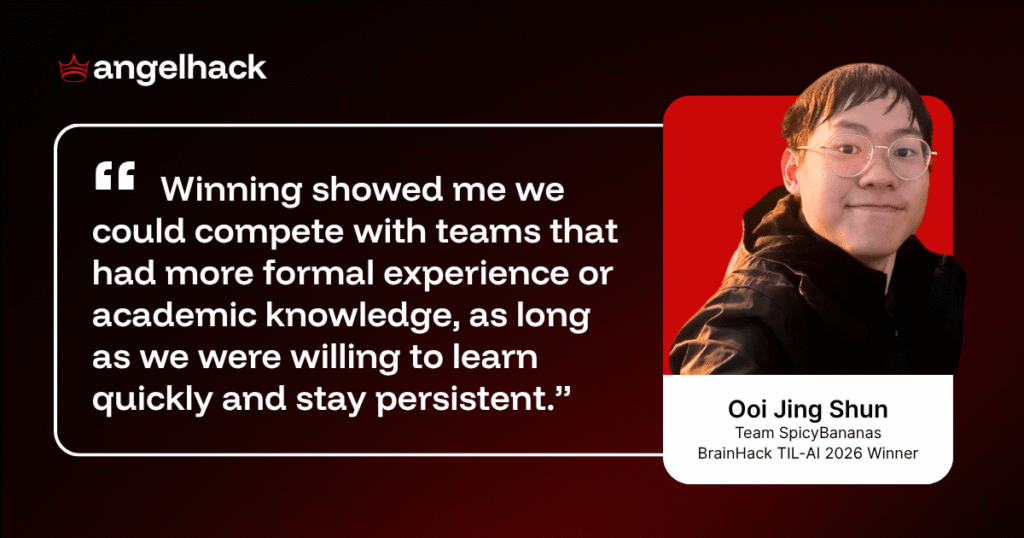
Jing Shun: Winning meant a great deal because it represented the completion of a three-year goal. It was especially meaningful because the result wasn’t immediate. It came after several years of learning, failed experiments, long training sessions, and continuous improvement. Winning showed me we could compete with teams that had more formal experience or academic knowledge, as long as we were willing to learn quickly and stay persistent. More importantly, it was a shared achievement. Every team member contributed something different, and the result wouldn’t have been possible without that partnership. Since then, I’ve grown more confident taking on unfamiliar AI problems, and I’ve kept applying what TIL-AI taught me to new projects.
「 Winning showed me we could compete with teams that had more formal experience or academic knowledge, as long as we were willing to learn quickly and stay persistent 」
What would you tell a first-time competitor?
Daksh: Once the competition begins, start simpler than your instincts tell you to. Build a reliable baseline, read the rules and evaluator carefully, and understand what the final round will actually test. A basic method that fits the real constraints can outperform a sophisticated system that is slow, fragile or aimed at the wrong metric. Treat every experiment as a question. Once the evidence points you towards a direction, commit to it. Finally, talk to people. Mentors, organisers and other participants will often give you insights that no leaderboard can.
Jing Shun: Come in with the energy to learn and win. Aim high, but do not place so much pressure on yourself that you become afraid to experiment or fail. Do not wait until you feel completely prepared, because you probably never will. Start with what you know, build strong fundamentals and be willing to ask questions. Talk to the mentors, organisers and other participants as well. Some of the most valuable lessons may come from a short conversation rather than from the final result. Most importantly, enjoy the process.
「 Do not wait until you feel completely prepared, because you probably never will. Some of the most valuable lessons may come from a short conversation rather than from the final result 」
How was working with the AngelHack team?
Daksh: My experience with the AngelHack team was excellent, and I don’t say that lightly. Ryan in particular delivered an experience like no other. He was helpful the moment we hit a wall, understanding every time our schedules got stretched thin between school and internships, and motivating at exactly the points where we needed a push. Plenty of organisers can run an event. Very few make you feel actively backed while you’re in the middle of one. The competition ran professionally, and the infrastructure was solid enough that we could put our energy into the challenges instead of the platform. They also clearly listen, since participants who’ve returned for years say the competition visibly improves each edition.
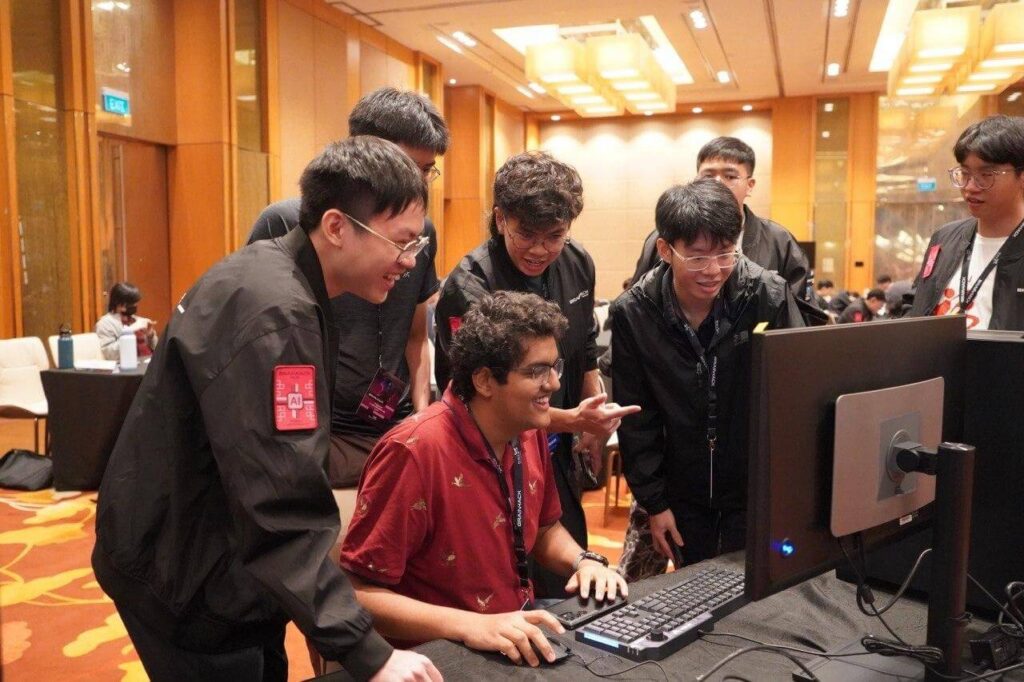
BrainHack TIL-AI gave students real defence problems to solve, with the mentorship and infrastructure to prove their models under live pressure. SpicyBananas is one of those stories. For the third year running, AngelHack designed and ran the track end to end, from challenge design to the finals floor.
Subscribe to TechTalk by AngelHack
Let’s keep you updated on the latest developer events around the world as well as in-depth insights on how to champion innovation and developer relations.